What to Plant After Removing Buckthorn, Honeysuckle and Autumn Olive: Michigan Natives That Hold the Ground
The Gibson Environmental Services crew
More than 10 years clearing land, cutting trails, and running forestry equipment in Southeast Michigan.
Plant something, and plant it the first spring. Cleared ground where buckthorn, bush honeysuckle, autumn olive or barberry stood is full of their seed and ringed by the birds that drop more, and the research is plain about what happens next: the Minnesota researchers who tested it found that re-establishing dense native cover right after buckthorn removal cut the amount of buckthorn coming back roughly in half when the cover was grasses, sedges and wildflowers, and cut it the most, by a large margin, when the cover was native trees and shrubs that shade the ground. Bare ground, left alone, grows buckthorn.
This guide gives the Michigan natives that do that job, matched to the invasive they replace and to the light and soil of the spot, and the two-year plan that goes with them: what to mow, what to watch for and when to replant. It follows our removal guides for buckthorn, bush honeysuckle, autumn olive and Japanese barberry, and it is the last step of the invasive growth removal work we do.
Why the Replanting Decides Whether the Removal Lasts
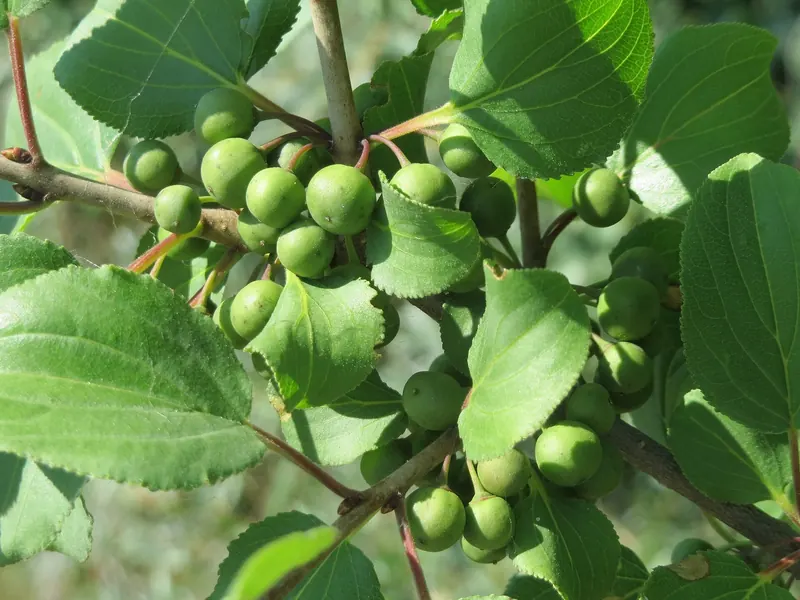
Buckthorn and honeysuckle win by leafing out before the native woods in April and holding their leaves after it in October, so they take the light at both ends of the season and shade out everything under them. Take them out and the ground gets full light for the first time in years, and the first thing that light grows is the seed bank they left: thousands of seeds per square yard under an old buckthorn hedge. The Minnesota researchers' point is that the cure is the same trick in reverse: natives that leaf early and hold late, planted densely enough to close the gap, take that light back. Their field plots showed the strongest effect from native trees and shrubs, a solid effect from native grasses, sedges and wildflowers, and no effect at all on buckthorn that was already resprouting from a cut stump, which has to be mowed or treated separately.
On a mulched site the chip layer does the first year's work for you: it shades the seed bank and holds moisture. Plant through it, pull the chips a few inches back from each stem, and the chips keep the weeds down while the natives get their roots in. Our guide to what happens to the mulch after forestry mulching covers that layer.
The Swap Table: Michigan Natives for Each Invasive
| Invasive removed | Where it grew | Native shrubs and small trees to plant | Why these |
|---|---|---|---|
| Common buckthorn | Woodlot edges, shade and part shade, any soil | American hazelnut, gray dogwood, pagoda dogwood, nannyberry, arrowwood viburnum, maple-leaved viburnum, serviceberry, chokecherry | Thicket-forming natives that leaf early, fruit for birds and tolerate shade; hazelnut and gray dogwood spread by suckers and close the gap fastest |
| Glossy buckthorn | Wet ground, pond edges, low woods | Red-osier dogwood, silky dogwood, buttonbush, highbush cranberry, winterberry holly, spicebush, elderberry | Wet-footed natives; red-osier dogwood roots from cuttings stuck in the ground and holds a bank |
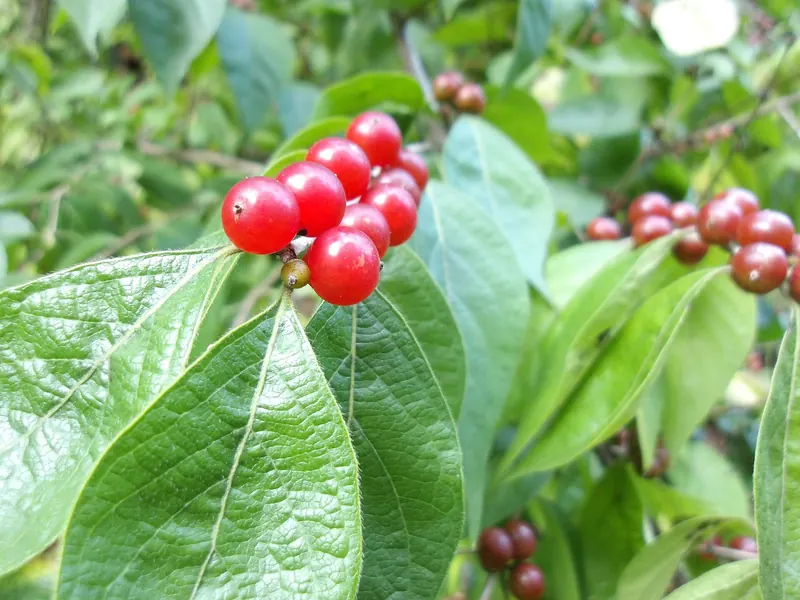
| Bush honeysuckle | Woodlot understory and edges, part shade | Spicebush (moist), American hazelnut, pagoda dogwood, nannyberry, witch hazel, northern bush honeysuckle (the native Diervilla, no relation) | Shade-tolerant, early-leafing understory shrubs; witch hazel and spicebush are the ones birds and butterflies want |
| Autumn olive | Full sun, poor and sandy soil, old fields, fence rows | American plum, hawthorn, staghorn sumac, ninebark, black chokeberry, New Jersey tea, native roses, serviceberry | Sun-loving, drought-tolerant, thicket-forming; plum and sumac sucker into cover the way autumn olive did |
| Japanese barberry | Woodlot understory, deer-browsed ground | Ninebark, fragrant sumac, New Jersey tea, maple-leaved viburnum, native blueberry on acid soil | Low, dense natives; fragrant sumac and ninebark are rarely browsed |
| Callery pear | Full sun, field edges, roadsides | Serviceberry, hawthorn, American plum, native crabapple, eastern redbud | White or pink spring bloom, fruit for birds, none of the thorns |
| Multiflora rose | Fence rows, pasture edges, sun to part shade | Native roses (pasture rose, swamp rose), ninebark, gray dogwood, American hazelnut | The same hedge function without the arching canes |
The trees that belong over all of these, on a woodlot being restored: oaks, hickories, black cherry, red maple, basswood, tulip tree on the richer ground and sycamore on the wet. A native canopy is the long-term shade that keeps the understory honest; it just takes thirty years to arrive, which is why the shrubs go in first.
Groundcovers and Grasses for the First Two Years
Shrubs take three or four years to close a gap. The ground between them is where the seedlings come up, and the Minnesota work found the native grasses and sedges hold it best: the wild ryes in particular, which come up early, grow dense and seed themselves. For a shaded woodlot floor, Pennsylvania sedge, Virginia wild rye, bottlebrush grass, wild geranium and woodland sunflower. For a sunny edge or an old field, little bluestem, Virginia wild rye, Canada wild rye, switchgrass, goldenrod, asters and wild bergamot. Seed is the cheap way to cover an acre; plugs are the fast way to cover a hundred feet of edge. Either goes straight into or through the chip layer.
The Two-Year Plan
Year one, spring
Plant the shrubs and trees as soon as the ground can be worked, through the chip layer, with the chips pulled back from each stem. Seed the grasses and wildflowers at the same time. Water new shrubs through the first summer in a dry year.
Year one, summer
Mow or brush hog the sprouts from any buckthorn, honeysuckle or autumn olive stump that was cut rather than treated, before they are knee high, and again in late summer. This is the step the native planting does nothing for; sprouts outgrow seedlings every time. See stumps after forestry mulching.
Year one, fall
Walk the ground in late October, when buckthorn still holds its leaves and everything native has dropped. Every green buckthorn seedling is easy to see and easy to pull.
Year two
Mow the sprouts once more in early summer. Fill gaps in the planting. Pull seedlings in April, when buckthorn and honeysuckle leaf out a week ahead of the woods, and again in October. By the end of year two the shrubs are shading their own ground.
Years three to five
An October walk each year to pull what the birds brought. The seed bank thins out over a few years; the birds never stop, but a closed native edge gives their seed nowhere to grow.
Deer, Soil and the Other Things That Go Wrong
- Deer: in Oakland, Lapeer and Livingston County woodlots, deer browse will take out young shrubs the first winter. Cage the oaks and the viburnums, or plant the ones they leave alone: ninebark, fragrant sumac, spicebush, pawpaw, and any grass or sedge.
- Soil: autumn olive and black locust fixed nitrogen for years and the ground under them is rich. Expect rank growth of whatever you seed and of the weeds; mow it high the first summer.
- Light: a cleared edge gets more sun than the same spot did under the hedge. Match the plant to the new light, not the old.
- Wet ground: if the invasive was glossy buckthorn or the honeysuckle was in a low spot, the ground is wet. Use the wet-footed natives in the table.
- Resprouts: a stump that sprouts is not solved by planting. Mow it or treat it; the planting handles the seedlings.
How This Fits a Clearing Job
Our forestry mulching pass takes the invasive shrubs down to the ground between the keeper trees you flag and leaves a chip layer instead of a brush pile. Tell us on the walk-through that you plan to replant and we leave the native shrubs that are already there, mulch around rather than over them, and time the pass for the dormant season so the ground is ready for a spring planting. The guides to the worst invasive plants in Michigan and to weed trees and trash trees cover what comes out; this one covers what goes in.
Common Questions
Will buckthorn grow back after cutting?
From the stump, yes, unless the stump is treated the same day or the sprouts are mowed for two summers until the root gives up. From seed, yes, for several years, which is what a dense native planting and the chip layer are for. Planting does nothing for a sprouting stump; mowing or treating does.
What should I plant to replace buckthorn?
In shade or part shade: American hazelnut, gray or pagoda dogwood, nannyberry, arrowwood viburnum, serviceberry and chokecherry, with Pennsylvania sedge and Virginia wild rye between them. On wet ground: red-osier dogwood, buttonbush, winterberry and spicebush. Plant densely, the first spring after removal.
What should I plant after removing honeysuckle?
Spicebush on moist ground, hazelnut, pagoda dogwood, nannyberry and witch hazel in the understory, with sedges and wild rye underneath. The native bush honeysuckle, Diervilla, is unrelated to the invasive one and a good low shrub for a dry edge.
What grows well where autumn olive was?
Sun-loving natives for poor soil: American plum, hawthorn, staghorn sumac, ninebark, black chokeberry, New Jersey tea and native roses, with little bluestem and wild rye between them. The soil under old autumn olive is rich in nitrogen, so expect everything to grow fast the first year, weeds included.
How fast does buckthorn spread?
A fruiting female seeds the ground under it and every fence row the birds fly to, and the seedlings can wait several years in the soil for light. That is why the first two Octobers after a removal, when buckthorn still holds green leaves after the natives have dropped, are for pulling seedlings.
What kills buckthorn best?
For a stand, cutting it to the ground with a mulcher in the dormant season and either treating the stumps or mowing the sprouts for two summers. For the seed bank, dense native cover that shades the ground. Goats, pulling and repeated mowing all work on small patches with persistence.
Should I remove buckthorn from my yard?
Yes. It shades out everything native, holds the ticks and the birds spread it to every edge within a mile. A small patch is a weekend with a saw and a wrench-style puller; a hedge or a woodlot edge is a mulching pass. Replant the same season.
When is the best time to plant after clearing?
The first spring after a dormant-season clearing, as soon as the ground can be worked. Fall planting works for shrubs too, from September to the ground freezing. Seed goes down in spring or as a dormant seeding in late fall.
Sources and Further Reading
The replanting research is from the University of Minnesota; native status and ranges follow the University of Michigan Herbarium's Michigan Flora. The plant lists are the standard native alternatives for southern Michigan.
Minnesota Invasive Terrestrial Plants and Pests Center, University of Minnesota: Cover it Up! Buckthorn control with native plants
University of Minnesota: Cover It Up: using plants to control buckthorn (project site)
Ask Extension (Cooperative Extension): What to plant after removing buckthorn?
University of Michigan Herbarium: Michigan Flora Online (native status and county records)
Michigan Invasive Species Program: Common buckthorn
Where We Do This Work
The work in this guide is done across eight Southeast Michigan counties from our base in Royal Oak. Every county page lists the townships we work in most, with a page for each.
Clearing Invasives and Planning to Replant?
Tell us on the walk-through. We keep the natives that are already there, time the pass for the dormant season and leave the ground ready for spring.