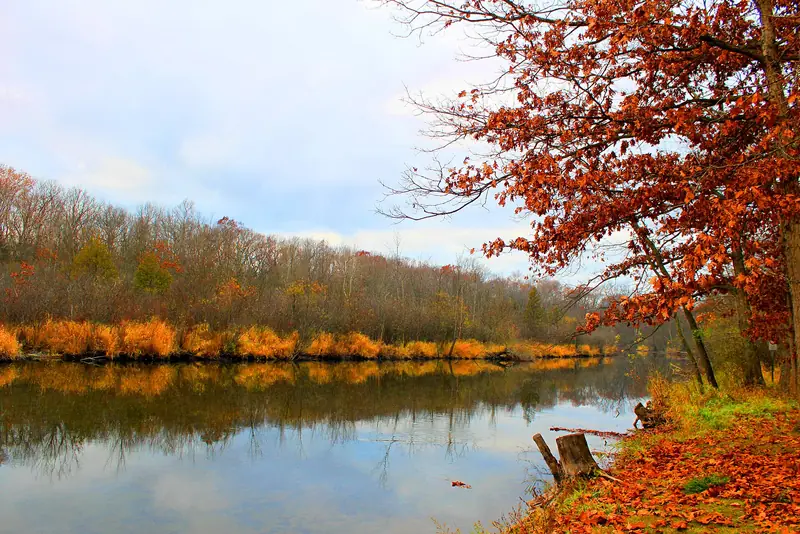
Southeast Michigan has hundreds of lakes with houses on them, and nearly every lake lot has the same problem: the bank between the lawn and the water grows a wall of buckthorn, honeysuckle, box elder and grapevine that blocks the view and makes the shoreline unusable. The same thing happens on Huron River frontage from Milford to Dexter, on the Clinton and the Belle, and on every creek bank in the county.
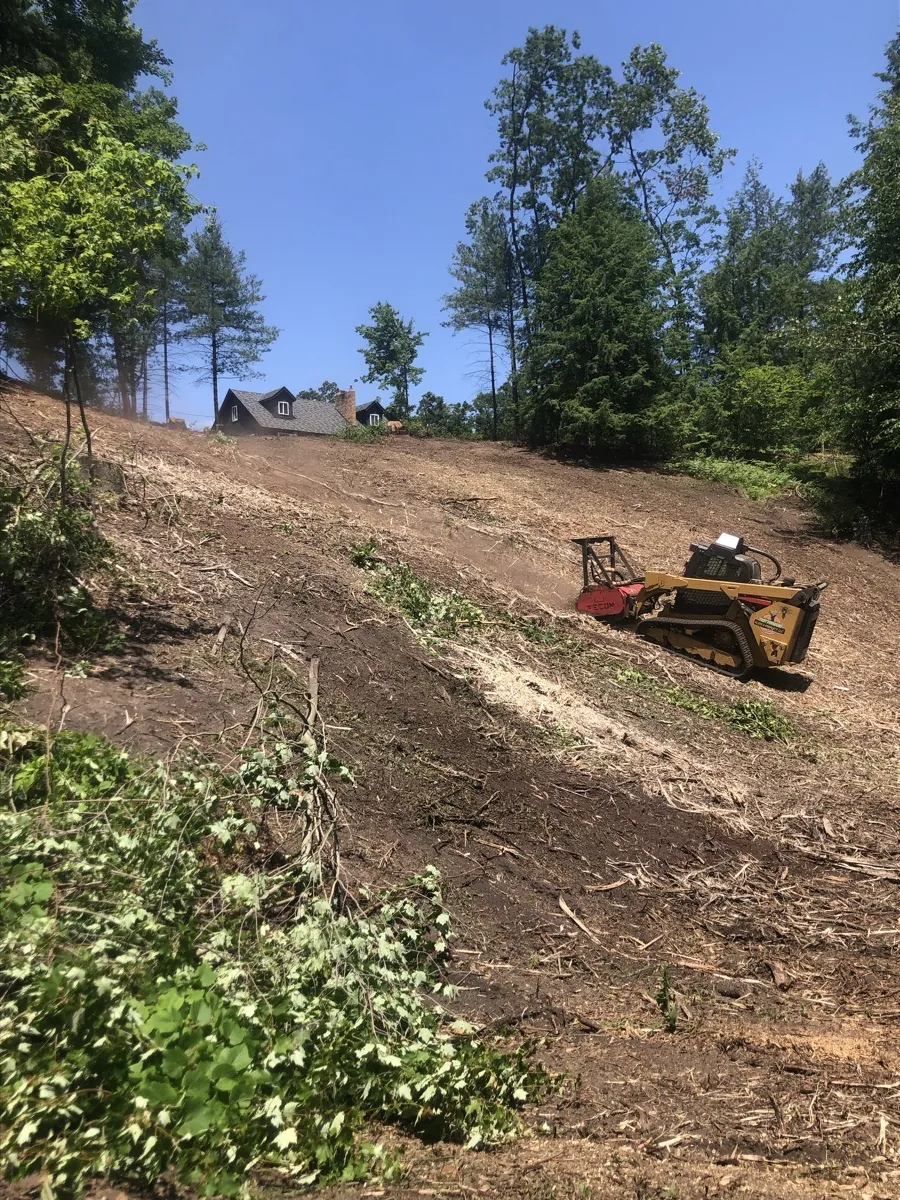
Bank work is where a forestry mulcher earns its keep. The machine is on tracks, it works from the top of the bank on stable ground, and it grinds the brush into a chip layer that stays on the slope and holds the soil through the spring melt. Nothing is dragged up the bank, nothing goes in the water, and the shade trees over the lake stay exactly where they are. Every bank is walked and planned on site before the machine starts, the way our hillside clearing guide describes.
Most lake lot jobs are a single day. You get the view back, a bank you can walk down, and grass through the chips by the following summer. Send two photos, one from the deck looking down and one from the dock looking up, and we can usually price it from those.
What we clear
- The brush wall between the house and the water on lake lots.
- River frontage on the Huron, Clinton, Belle, Flint, Raisin and their creeks.
- Steep banks and embankments, walked and planned on site.
- Understory under the shade trees so the lot looks like a park from the water.
- Channel and canal edges on the chain-of-lakes lots.
- The narrow side-yard route in and out, protected on the way through.
What you get
- A clear view of the water from the house.
- A chip layer on the slope that holds the bank until grass comes through.
- The shade trees over the water, untouched.
- No brush piles, nothing in the lake, nothing hauled through the side yard.
How the Job Goes
Two photos
From the deck looking down and from the dock looking up, plus a photo of the side-yard access. That is usually enough to price it.
Walk the bank
We walk it with you, flag the shade trees that stay, and plan where the machine works from.
Grind from the top
The brush is ground to a chip layer from stable ground, working down the slope.
Let it green up
The chips hold the bank through the spring, and grass comes through them by the second summer.
When to do it
Any season for the bank itself. Wet lake edges are best on frozen ground. Fall, after the leaves drop, is when most owners realize how much view they lost.
How it is priced
By the project: the length of frontage, the height and pitch of the bank, and the density. Most lake lots are a one-day job. See the pricing guide.
The Ground This Work Happens On


Where We Do This Work
Counties and townships where this job comes up most. Every page covers the local ground and the common jobs.
Questions About This Work
My bank is steep. Can you still do it?
Yes. Steep banks are walked and planned on site, the machine works from stable ground, and the chip layer stays on the slope and holds it. That is the job the tracked machine was built for.
Does anything end up in the water?
No. The brush is ground in place on the bank, above the water line, and nothing is dragged or pushed into the lake.
Can you get in through a narrow side yard?
Yes. Send a photo of the access and we will confirm the route. There is no brush pile to drag back out, which is the main advantage on a tight lake lot.
Will the shade trees over the water be affected?
No. You flag the trees that stay and we grind around them. The roots under the chip layer are not disturbed.
Other jobs we do
Related Guides
Steep Hillside Clearing in Michigan: How We Clear Slopes, Creek Banks, and Embankments With a Forestry Mulcher
How Gibson Environmental Services clears overgrown hillsides, creek banks, pond slopes, and embankments in Metro Detroit with a tracked...
Read the guide →
The 10 Worst Invasive Plants in Michigan (and How to Actually Get Rid of Them)
Michigan's 10 worst invasive plants, how to tell them apart, and what it takes to clear buckthorn, honeysuckle, autumn olive and...
Read the guide →
Fall and Winter Land Clearing in Michigan: Why the Cold Months Are the Best Time to Mulch
Why Southeast Michigan land clearing often goes best from October to March: frozen ground on wet lots, leaf-off visibility, and what to...
Read the guide →Ready to Get This Done?
Send the address and a few photos through the quote form, or call. You will get one project price for the whole job.