
Japanese Barberry in Michigan: How to Identify It and Clear It From the Woods
The Gibson Environmental Services crew
More than 10 years clearing land, cutting trails, and running forestry equipment in Southeast Michigan.
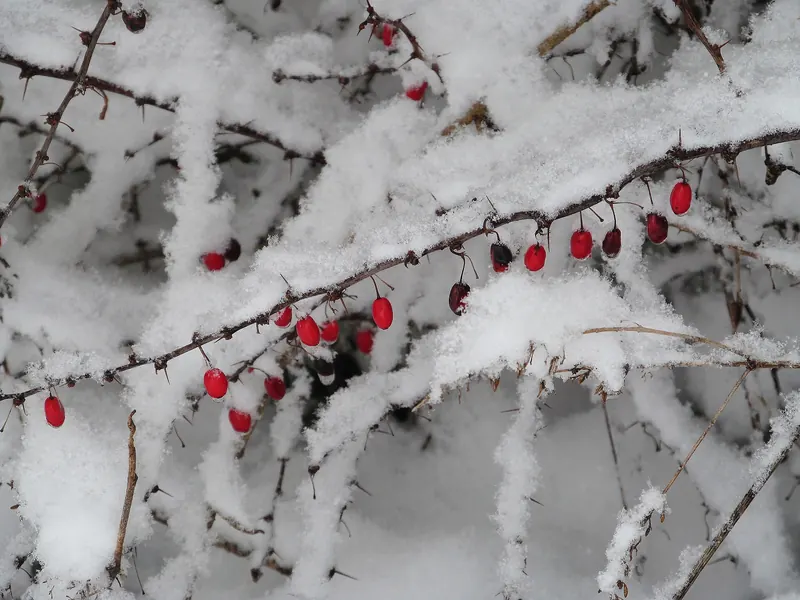
Japanese barberry is the low, thorny shrub with the small spoon-shaped leaves and the bright red berries that hang on all winter. It is still planted as a hedge, and from those plantings it has moved into woodlots, stream banks and old fields across Southeast Michigan. It can take hold under a full forest canopy, and deer will not eat it.
This guide covers how to identify Japanese barberry, why it matters to anyone who walks their own woods, and what it takes to clear it. It is one of the plants in our ten worst invasive plants guide.
Japanese Barberry at a Glance
| Japanese barberry | |
|---|---|
| Scientific name | Berberis thunbergii |
| Origin | Japan; a common landscape shrub that escapes from yards |
| Size | Spiny shrub, typically 2 to 3 feet tall |
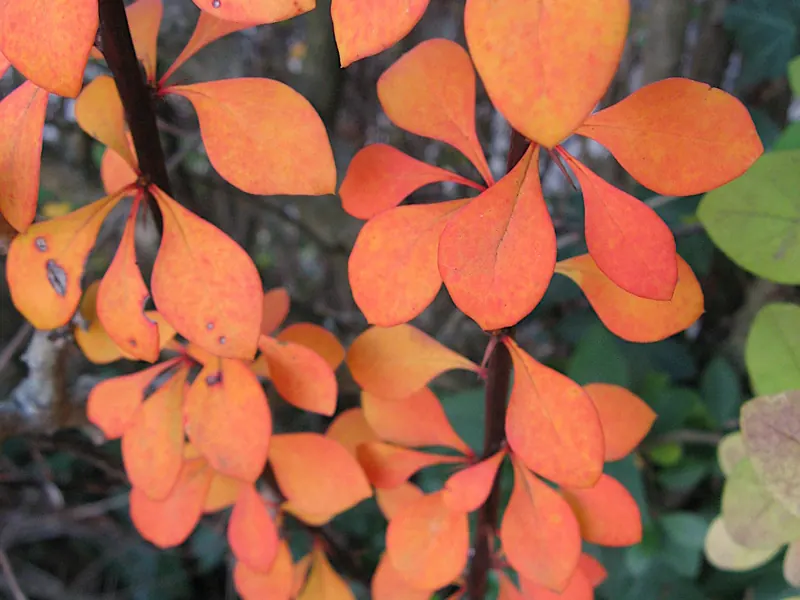
| Leaves | Small, oval to spoon-shaped, smooth-edged, half to three-quarters of an inch, in clusters |
| Stems | Many, slightly curving and spiny; reddish brown in winter |
| Inner bark | Yellow |
| Flowers | Small, yellow, April and May |
| Fruit | Bright red, egg-shaped berries from midsummer, staying on into winter |
| Favorite ground | Woods edges, open woods, stream banks, roadsides, old fields |
How to Identify Japanese Barberry
The leaves
Small, oval to spoon-shaped leaves with smooth edges, growing in tight clusters along the stem. They are bright green above and lighter below, and turn red to purple in fall. Garden varieties can be red or purple all season.
The spines
Slender, sharp spines run the length of every stem, one at each cluster of leaves. A patch of barberry is not something to walk through in shorts.
The yellow inner bark
Scrape a stem with a knife. The inner bark is yellow.
The berries
Bright red, egg-shaped berries hang singly or in small clusters on slender stalks. They ripen in midsummer and stay on the stems into winter.
The spring test
Barberry leafs out before the native shrubs. In early spring it is one of the first things green on the woods floor, which is the easiest time to see how far it has spread.
What Gets Mistaken for Japanese Barberry
Other barberries
American barberry and common barberry have toothed leaf edges and spines that usually come in threes. Japanese barberry has smooth-edged leaves.
Not sure which one you have? Send photos of a leaf cluster, a stem and the whole shrub. That is usually enough to tell.
Why Japanese Barberry Spreads
It starts in the yard
Barberry is a common landscape shrub, and it escapes. Birds, deer, turkey and grouse eat the berries and carry the seed from a hedge into the nearest woods.
It grows under the trees
It tolerates a wide range of soil, moisture and light, and it can establish under a closed forest canopy. It does not need an opening to get started.
Deer leave it alone
Deer browse the native plants around it and pass the barberry by, so the woods floor shifts a little further toward barberry every year.
It spreads three ways
By seed, by creeping roots, and by branches that take root where they touch the ground. Cut stumps sprout as well.
Ticks do well in it
Studies in Connecticut have found more blacklegged ticks, the kind that carry Lyme disease, in woods thick with barberry than in woods where the barberry had been cleared. The dense, low cover holds the humidity that ticks need.
How to Remove Japanese Barberry, by the Size of the Problem
Young plants
Pull or dig them, and get all of the root. Heavy gloves make it a much better job.
Scattered shrubs
Cut them at the ground, starting with the mature shrubs that are making seed. A cut stump sprouts, so plan on a stump treatment at the time of cutting, or on cutting the sprouts back until the root is spent.
A woodlot floor or a field edge full of it
This is forestry mulching work. The trees you want to keep are flagged first, and the mulching head grinds the barberry to the ground between them and leaves a chip layer: no thorny brush to handle and nothing to burn. The forestry mulching page explains the method and the invasive growth removal page covers the day on site.
After the clearing
A walk-through each spring, when barberry is the first thing green, catches the sprouts and seedlings while they are small.
The Follow-Up Plan
| When | What the barberry does | What keeps it down |
|---|---|---|
| The day it is cleared | Shrubs are ground to a chip layer | The woods floor is open and walkable |
| First spring | Sprouts and seedlings leaf out early | Walk it while they are easy to see; pull or cut them |
| Second spring | Fewer sprouts; seedlings from carried seed | A second walk-through |
| Every year after | Birds and deer bring in new seed | A quick check each spring |
When to Remove Japanese Barberry in Michigan
Early spring is when barberry is easiest to find, because it leafs out before the native shrubs.
Summer and fall are good for clearing woods and field edges. Clearing before the berries ripen in midsummer keeps that year's seed out of the woods.
Winter on frozen ground is the time for stream banks and low woods. The red berries make the shrubs easy to pick out against the snow.
What Japanese Barberry Removal Costs
Every job is one written project price, from photos or a walk-through, with the size of the area, the density of the growth, the terrain and the travel built in. The pricing guide explains what moves the number.
Common Questions
Is the barberry in my yard the same plant?
Often, yes. Japanese barberry is sold in green, red and purple-leaved varieties, and birds carry the seed from yard hedges into nearby woods. Some varieties produce little or no fruit.
Does barberry really mean more ticks?
Studies in Connecticut found more blacklegged ticks in woods thick with barberry than in woods where it had been cleared. The dense, low cover holds the humidity ticks need.
Will Japanese barberry grow back after clearing?
Some stumps sprout and seedlings come up from seed that birds and deer carry in. A walk-through each spring, when barberry is the first thing green, keeps it from coming back.
How do I tell Japanese barberry from other barberries?
Look at the leaf edge. Japanese barberry leaves are smooth-edged. American and common barberry have toothed leaves and spines that usually come in threes.
What is the best time of year to clear Japanese barberry?
Any time the ground will carry the machine. It is easiest to find in early spring, and stream banks and low woods are cleared on frozen ground in winter.
Can you tell what I have from photos?
Usually. Send a close photo of a leaf, one of a twig or cane, and one of the whole stand, and we will tell you what it is and how we would clear it.
Sources and Further Reading
The identification details and figures in this guide come from published university and state references. These are the ones to read for more depth.
University of Michigan Herbarium, Michigan Flora: Japanese barberry (Berberis thunbergii)
Michigan Natural Features Inventory, Michigan State University Extension: Japanese barberry best control practices
USDA National Invasive Species Information Center: Japanese barberry
Penn State Extension: Japanese barberry
Where We Do This Work
The work in this guide is done across eight Southeast Michigan counties from our base in Royal Oak. Every county page lists the townships we work in most, with a page for each.
Barberry Spreading Through Your Woods?
Send a few photos of the growth and the address. We will tell you what it is, how we would clear it, and give you one written price for the job.