
Autumn Olive in Michigan: How to Identify It and Take a Field Back From It
The Gibson Environmental Services crew
More than 10 years clearing land, cutting trails, and running forestry equipment in Southeast Michigan.
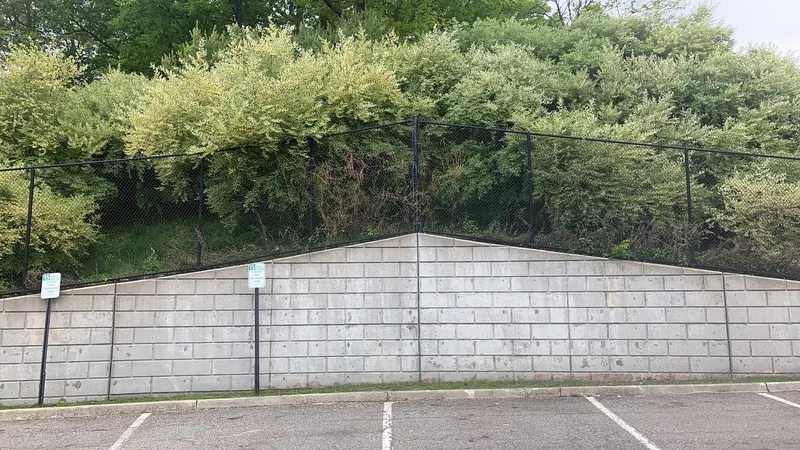
Autumn olive is the shrub with the silver-backed leaves that fills an old field in a few years. It was planted across Michigan on purpose, for wildlife food and cover, and it has been spreading from those plantings ever since. We clear it in every county we work in, most often from pasture edges, idle hay ground and the openings on hunting parcels in Lapeer, Oakland, Livingston and St. Clair counties.
This guide covers how to identify autumn olive, what gets mistaken for it, why it takes over a field so fast, and what it takes to clear it and keep the ground open. For the invasives that usually grow alongside it, see the ten worst invasive plants guide and the buckthorn guide.
Autumn Olive at a Glance
| Autumn olive | |
|---|---|
| Scientific name | Elaeagnus umbellata |
| Origin | Asia; brought to the United States in the 1830s |
| Size | Shrub or small tree, to 20 feet tall and 30 feet wide |
| Leaves | Alternate, oval, 2 to 4 inches, wavy edge with no teeth; green above, silvery below |
| Twigs | Silvery with brown scales; thorns on young branches |
| Flowers | Cream to light yellow, fragrant, April to June |
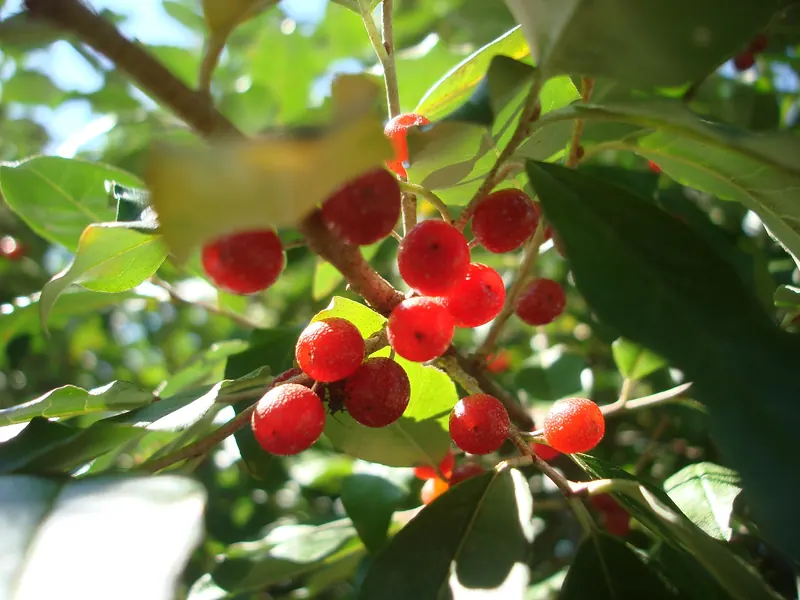
| Fruit | Speckled red, ripe in September and October |
| First fruit | As early as three years old |
| Favorite ground | Old fields, pasture, forest edges, roadsides |
How to Identify Autumn Olive
The silver underside
Flip a leaf over. The top is bright green and the underside is silvery and covered in tiny scales, which is why a stand looks gray-green from across a field, most of all when the wind turns the leaves.
The speckled twigs
Young twigs are silvery with brownish scales that give them a speckled look, and young branches often carry thorns that can be several inches long. The speckling is there in winter too, so autumn olive can be picked out with no leaves on it.
The flowers
Small, tubular, cream to light yellow flowers sit in clusters along the twig from April to June. They are fragrant enough to notice from a distance.
The fruit
The berries start out silvery with brown scales and ripen to a speckled red in September and October. They hang on late into winter, and the birds that eat them carry the seed to the next fence row.
The two-second check
Autumn olive always has leaves that alternate along the twig, and it always has tiny glistening scales on the twigs, the fruit and the undersides of the leaves. If both are there, it is autumn olive or its relative Russian olive.
What Gets Mistaken for Autumn Olive
Russian olive
A close relative and also an invasive. It is taller, usually a tree with one or a few trunks, and its leaves are longer, narrower and silvery on top as well as underneath.
Buffaloberry
A native relative. Its leaves sit opposite each other on the twig, not alternating, and it is a smaller shrub, typically three to thirteen feet tall.
Bush honeysuckle
Red berries too, but the leaves are opposite and there are no scales on the leaves or twigs. It often grows in the same fence row; the bush honeysuckle guide covers it.
Why Autumn Olive Takes Over a Field
It was planted on purpose
Autumn olive was set out for wildlife food and cover before anyone knew what it would do. Many of the stands on Michigan farms and hunting land trace back to those plantings.
A longer season
It leafs out in mid-March and holds its leaves late into fall, so it shades out the grass and the native plants under it for most of the year.
Fruit by the pound
A shrub can fruit at three years old. A mature one can carry up to thirty pounds of fruit a year, which is up to 66,000 seeds, and more than seventy percent of that seed germinates.
It makes its own nitrogen
Nodules on the roots fix nitrogen from the air, so autumn olive thrives on poor, worn-out soil where little else does, and it changes that soil as it grows.
Deer leave it alone
Deer browse the native shrubs around it and mostly pass autumn olive by, which tilts the field further in its favor every year.
It resprouts
Cut it, mow it or burn it and a mature shrub sprouts back hard from the root crown.
One Thing That Works in Your Favor
Autumn olive seed sprouts so readily that it does not build up in the soil the way buckthorn seed does. Once the fruiting shrubs are gone, the new seedlings come from outside: the neighboring fence row, the roadside, the edge of the woods. That is why regular mowing after clearing works so well on this plant, and why a cleared field that is kept mowed stays a field.
How to Remove Autumn Olive, by the Size of the Problem
Seedlings and small plants
Pull them by hand when the soil is moist. Pull slowly and steadily, and press the soil back down afterward. A lever-type pulling tool handles stems up to about three and a half inches thick.
A few shrubs along a yard or fence
Cut them at the ground. Cutting alone brings on sprouts from the root crown, so plan on a stump treatment at the time of cutting, or on mowing the sprouts until the root is spent.
A field or fence row gone to autumn olive
This is forestry mulching work. We run a FECON mulching head on a high-flow tracked skid steer that grinds the shrubs and their root crowns to the ground and leaves a chip layer behind: no brush piles, nothing hauled and nothing burned. The forestry mulching page explains the method and the pasture reclamation page covers field work.
Keeping the field open
Mowing keeps new seedlings from establishing. One or two brush hogging passes a year holds a cleared field, and it is the step that decides whether the clearing lasts.
The Follow-Up Plan
| When | What the autumn olive does | What keeps it down |
|---|---|---|
| The day it is cleared | Shrubs are ground to a chip layer | The chips hold the soil; the field can be walked and mowed |
| First summer | Root crowns send up sprouts | A follow-up pass or mowing, before the sprouts harden |
| Second summer | Fewer sprouts; seedlings arrive from outside | Mow once or twice; grass fills in |
| Every year after | Birds keep bringing seed | One mowing a year keeps it a field |
When to Remove Autumn Olive in Michigan
Early spring and late fall are when autumn olive is easiest to find, because it is green when the native plants around it are not.
Summer, before the fruit ripens in September, is a good time to clear a stand that is fruiting, because it keeps that year's seed out of the field.
Winter on frozen ground is the time for the low, wet corners of a field.
What Autumn Olive Removal Costs
Every job is one written project price, from photos or a walk-through, with the acreage, the density of the stand, the terrain and the travel built in. Mowing visits afterward are priced the same way. The pricing guide explains what moves the number.
Common Questions
How do I tell autumn olive from Russian olive?
Look at the top of the leaf. Autumn olive is bright green on top and silvery underneath. Russian olive is silvery on both sides, with longer, narrower leaves, and it usually grows as a taller tree.
Will autumn olive grow back after forestry mulching?
Some root crowns send up sprouts the next summer. A follow-up pass or mowing handles them, and regular mowing after that keeps new seedlings from taking hold. Plan on two seasons to finish a stand.
Should I leave autumn olive for the deer and birds?
Birds and other animals do eat the fruit, which is exactly how it spreads. Clearing it and keeping the ground in grass, clover or native shrubs gives wildlife food and cover without losing the field.
Do goats get rid of autumn olive?
Goats eat it readily and will strip a shrub as high as five feet. They can clear the brush in a season, but it takes several years of repeated grazing to kill the shrubs.
What is the best time of year to clear autumn olive?
Summer before the fruit ripens, or late fall when it is still green and easy to see. Wet corners are cleared on frozen ground in winter.
Can you tell what I have from photos?
Usually. Send a close photo of a leaf, one of a twig or cane, and one of the whole stand, and we will tell you what it is and how we would clear it.
Sources and Further Reading
The identification details and figures in this guide come from published university and state references. These are the ones to read for more depth.
University of Michigan Herbarium, Michigan Flora: autumn-olive (Elaeagnus umbellata)
Michigan Natural Features Inventory, Michigan State University Extension: Autumn olive best control practices
USDA National Invasive Species Information Center: Autumn olive
Penn State Extension: Autumn olive
Where We Do This Work
The work in this guide is done across eight Southeast Michigan counties from our base in Royal Oak. Every county page lists the townships we work in most, with a page for each.
Autumn Olive Taking Over a Field or a Fence Row?
Send a few photos of the growth and the address. We will tell you what it is, how we would clear it, and give you one written price for the job.