
What Happens to the Mulch After Forestry Mulching, and What You Can Do With It
The Gibson Environmental Services crew
More than 10 years clearing land, cutting trails, and running forestry equipment in Southeast Michigan.
When we finish a forestry mulching job, the brush and small trees are gone and a layer of wood chips covers the ground. Nothing is piled, hauled or burned. The chips stay where they fall, and the ground is walkable and mowable the same day. Owners then ask what that layer does, how long it lasts, and whether they can plant or build.
This guide answers those questions: how deep the chip layer is, what it does for the soil, how long it takes to break down, and what to do with it for grass, a food plot, a pasture or a building lot. If you are still deciding on the method, the forestry mulching page explains how the machine works.
What the Chip Layer Is
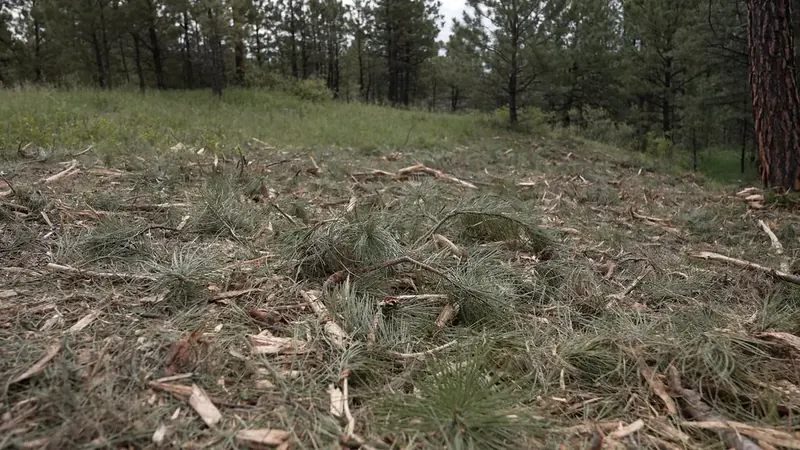
Our forestry mulching head is a drum with teeth, mounted on a high-flow tracked skid steer. It grinds brush and trees up to roughly 6-8 inches at the stem in one pass, and larger trees are taken down in pieces and ground too. What comes out the back is the chip layer.
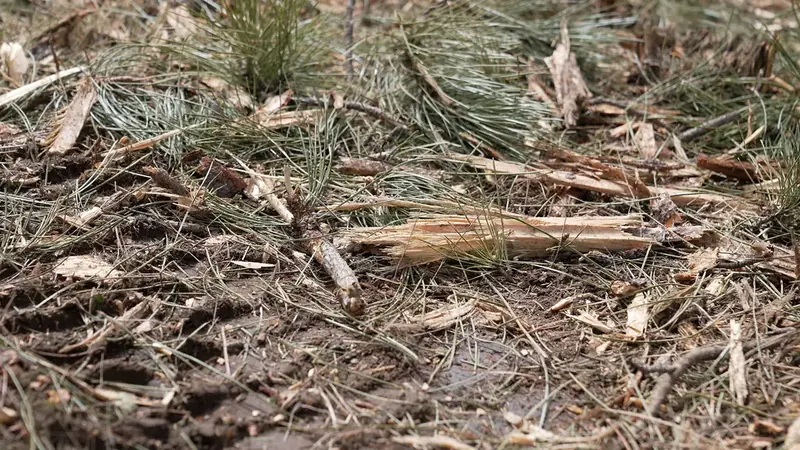
The layer is mixed. It runs from fine shreds to pieces a few inches long, all lying together, with the stumps ground flush to the ground. The day we leave, it looks like a freshly bark-covered trail: tan and brown, loose underfoot, with the fresh color of the wood showing. Over the first weeks it darkens and settles.
The roots stay in the soil under it. That is why there is no bare dirt, and why there is little erosion.
How Deep It Is and Why That Matters
Depth follows what was standing. The more growth that was ground in place, the more chips end up on the ground.
| Growth that was cleared | Typical chip depth | What that means |
|---|---|---|
| Light brush and saplings | Thinner than 2 inches | Soil and grass show through in places. Grass and clover come back on their own, and seed takes easily. |
| Medium brush | Typically 2-4 inches | A full blanket. Walkable and mowable at once, and it holds soil and weeds back for the first season. |
| A thick stand ground in place | Deeper than the medium range | The slowest to break down. Rake, drag or disk the layer before seeding anything. |
| Trees taken down in pieces | Uneven, deeper around the larger trees | Fine to leave where it lies. Where you plan to seed, the deep spots are worth raking out thinner. |
Depth is not good or bad. It is a fact about your ground that decides the next step. Send us photos and we will tell you what to expect on your parcel.
What It Does for the Ground in Year One
Holds the soil on slopes
The roots stay in the ground, and the chip layer sits on top of them. Rain lands on chips instead of bare soil, so banks and slopes hold. A tracked machine works on slopes, and what it leaves behind keeps them in place.
Keeps weeds and seedlings down
The layer suppresses the first season of weeds and seedlings by shading the soil and blocking new sprouts. A cleared field that would have filled with weeds its first summer stays much quieter.
Keeps mud down and makes it walkable
Chips spread the weight of boots, tires and hooves, so wet ground firms up. Wet corners are done on frozen ground, and the layer keeps those spots from turning to muck afterward. You can walk the ground the day we finish.
Feeds the soil as it breaks down
Every chip is organic matter on its way to becoming soil. As the layer breaks down, it adds organic matter to the ground it sits on, so the soil gains rather than loses.
The nitrogen tie-up, in plain words
Wood rotting at the surface uses up some nitrogen from the soil just under it. That is temporary, and it is a slowdown, not damage. It is why grass seeded straight into a deep layer comes in slowly, while a thin layer or raked rows take seed well.
How Long It Takes to Break Down
Plan on about 1-3 years, depending on how deep the layer is and what wood went into it. Softwoods and fine material go first. Hardwood chunks last. A deeper layer takes longer than a thin one.
| When | What the chip layer looks like |
|---|---|
| At six months | The fine shreds are darkening and matting down. Grass and weeds are working up through the thin spots. The larger chunks still look much as they did. |
| At one year | The layer has settled and thinned. Fine material is turning to soil at the bottom. Hardwood pieces are easy to see. |
| At two years | Most of a medium layer is soil-colored. Only the hardwood chunks hold their shape, and those crumble when you kick them. |
| At three years | Nearly all of it has gone into the soil, even where it started deep. A few hardwood bits turn up here and there. The ground looks like ordinary ground again. |
Growing Grass or Clover Through It
A thin layer: seed into it
Grass and clover come back through a thin layer on their own. If you want it thicker or faster, seed straight into the layer and the seed finds the soil.
A deeper layer: rake, drag or disk, then seed
Where the chips are deeper, work the layer first. Raking, dragging or disking mixes the fines into the soil and opens the surface so seed sits against dirt. Then seed.
For what comes back by itself and how fast, see the grass regrowth guide. For plots built to hold game, see the food plot site prep page.
Food Plots, Pasture and Lawns
Food plots
A plot wants seed in contact with soil. Rake, drag or disk the layer, then seed, and keep the chips you moved at the plot edge, where they hold the border. Raked rows take seed well.
Pasture
Grass fills in through the thin layer as the chips break down, and a drag run over the ground evens out the deeper spots. The pasture reclamation page covers fields that are going back to hay or grazing.
Lawns
A lawn wants smooth, seed-ready ground. Rake the layer thin, level it, and seed. The ground is mowable the same day, so a rough lot is usable while the new grass comes in.
Building on the Lot Later
The chip layer is soil in progress, not a base. Building pads, driveways and septic fields get a solid footing, so the chips are stripped and the stumps in the footprint are pulled. That is the builder's excavator, and it does it as part of the dig. Mulching first makes that dig faster, because the brush and small trees are already gone and the ground is open and walkable.
Everywhere else on the lot, the layer stays: the yard, the wooded edge, the sides of the drive. It holds the soil and breaks down on its own schedule while the build goes on.
For the full picture of clearing a lot for a house, see the new home site clearing page and the lot clearing guide. For how mulching and excavator clearing compare, read forestry mulching versus excavator land clearing.
Five Things People Do With the Chips
Leave it
The simplest choice, and the usual one. The layer breaks down in place and holds the soil. It needs no further work.
Spread it thinner
Where the layer came out deeper than you want, we can spread it thinner on request. A thinner layer breaks down sooner and takes seed sooner. It is priced into the job.
Rake it into rows or windrows for a plot
For a food plot or a planted strip, the chips are raked into rows. That leaves clean ground between the rows for seed, and the rows break down where they lie.
Push it to trail edges
On a trail, the chips go to the sides. That leaves a clear tread down the middle and a border that holds the soil.
Let it become the trail surface
On a walking or ATV trail, the chip layer itself is the surface. It is soft underfoot, it drains, and it keeps mud down as it packs.
What Comes Back Through It and What to Do
The roots stay in the ground, so the species that resprout send up shoots the next season: buckthorn, autumn olive, honeysuckle, box elder and willow. The shoots come up green through the chips, and they are easy to spot.
A follow-up pass or regular mowing finishes them. Brush hogging is the usual tool for keeping a cleared field open, and forestry mulching versus brush hogging explains how the two methods fit together.
The buckthorn guide and the autumn olive guide cover the two that most often come back, and what to do about each.
Common Questions
Do you haul the mulch away?
The chips stay on the ground, and that is the point of the method. Nothing is piled, hauled or burned, and the layer turns into soil as it breaks down.
Will the mulch kill my grass?
Grass and clover come back through a thin layer on their own. A deeper layer holds them back for a while, so it is raked, dragged or disked and seeded where you want grass.
How long until I can plant grass?
A thin layer or raked rows take seed right away. A deeper layer is worked first, then seeded, and it comes in slowly if the seed goes straight into the chips.
Can I burn the chips?
There is no pile to deal with. The chips are left spread across the ground to break down, and the ground is walkable and mowable the same day.
Is the chip layer a fire risk?
The chips are spread thin, not piled, and the layer holds moisture.
Can you spread it thinner or rake it for me?
Yes, on request. Tell us how you plan to use the ground, and the spreading or raking is priced into the one written project price, travel included.
Sources and Further Reading
Forestry mulching is called mastication in the research literature. These are the published references that line up with what we see on the ground, for anyone who wants more depth.
Washington State University Extension: Using arborist wood chips as a landscape mulch
Joint Fire Science Program, Colorado State University: Mastication effects on fuels, plants, and soils in four western U.S. ecosystems
U.S. Forest Service, Science You Can Use: Is mastication right for your site?
Where We Do This Work
The work in this guide is done across eight Southeast Michigan counties from our base in Royal Oak. Every county page lists the townships we work in most, with a page for each.
Want to Know What Your Ground Will Look Like After?
Send a few photos of the growth and the address. We will tell you what the chip layer will be on your parcel, what comes back through it, and give you one written price, travel included.