
Every bow season the same lanes need the same work. A stand that could see sixty yards into standing corn last October is looking into a wall of ragweed and volunteer trees this fall, and the crossing where two trails meet has closed in at exactly the height a deer's shoulder passes through. Shooting lanes in Lapeer County's Metamora, Hadley and Dryden townships and St. Clair County's Wales, Clyde, Kimball and Columbus townships run two different ways: long lanes of a hundred to two hundred yards down a fence line or a cut cornfield edge, and short thirty- to forty-yard lanes cut through standing timber to a single tree stand. Both close back in within a season or two if nothing is done, and both are a mulching job, not a chainsaw job.
A lane is not a clear-cut. The mulcher runs the centerline low, at or just above ground level, so the sightline opens at the height a deer actually presents rather than as an overhead tunnel any animal can see into from fifty yards off. Screening cover is left standing on both sides so the lane reads as a gap in the brush, not a mowed strip. Where two lanes cross at a natural funnel, both are cut to the same low profile so neither shooter loses the other's line. The approach path into the stand is planned as part of the same visit, routed from the downwind side, so getting to the lane does not put your scent across the ground the lane is supposed to cover. See stand access trails for that side of the layout.
Timing is what makes a lane work on opening day instead of against you. Lanes cut in late summer have weeks to go quiet before the October 1 bow opener, and the disturbance is long forgotten by the time deer are moving on a normal pattern again. Lanes through a swamp edge or a wet crossing wait for frozen ground, usually the same visit as any food plot site prep on the same parcel, since the machine is already on site. Hunting land clearing covers the rest of the property, and our hunting trail guide covers how lanes, approaches and plots fit together. Send a photo from each stand and the yardage you want, or walk the property with us, and get one project price through the quote form.
What we clear
- Long lanes on ag-field edges, opened to the full hundred to two hundred yards a rifle needs down a fence line or a crop edge.
- Short woods lanes of thirty to forty yards, cut through standing timber to the one tree a stand needs to see.
- Crossing lanes where two sightlines meet at a natural funnel, both cut to the same low height.
- The downwind approach into each stand, cleared as part of the same lane layout.
- Old lanes that have grown shut, reopened to their original width instead of cut fresh alongside them.
- Shooting lanes from box blinds and ground blinds, cut low enough to see a deer's body, not just its back.
What you get
- A lane cut low and narrow, with screening brush left standing on both sides.
- A downwind approach route into the stand, built into the same layout.
- No brush piles in the lane or at the tree line.
- Ground cover between lanes left exactly where it was.
How the Job Goes
Walk each stand
We look at the shot you actually have from each stand or blind and agree on how far the lane needs to reach.
Flag the centerline
The lane's centerline and width are marked, along with the screening cover staying on both sides.
Cut low and mulch in place
The mulcher grinds the lane at ground height in one pass, leaving chips instead of cut stubs.
Let it settle before the season
Lanes cut in late summer are quiet again well before opening day.
When to do it
Late summer, roughly mid-July through August, so a lane has weeks to settle before the October 1 bow opener and deer are back on a normal pattern by the time you hunt it. Swamp-edge and wet-crossing lanes wait for frozen ground, usually the same visit as other trail or plot work. Book ahead for lanes ready before firearm season on November 15.
How it is priced
Priced by the project: number of lanes, total yardage and how dense the growth is, with travel included in one written price before anything is cut. A parcel with several lanes, a crossing and an approach trail is usually priced and cut in a single visit. The pricing guide explains what moves the number.
The Ground This Work Happens On


Where We Do This Work
Counties and townships where this job comes up most. Every page covers the local ground and the common jobs.
Questions About This Work
How long does a lane take to close back in?
A lane left alone for two or three seasons fills back in from the sides with saplings and brush, and a wet corner can close faster than a dry one. Cutting on a schedule every couple of years, or right after the season each fall, keeps a lane from needing to be reopened from scratch.
Can you cut a lane along standing corn or a hay field?
Yes. Field-edge lanes are cut along the crop line at the width you want, and the work is scheduled around the growing season so the field itself is left alone. These are usually the long hundred- to two-hundred-yard lanes rather than the short woods lanes through timber.
Will cutting a new lane push deer off the property?
Any work in the woods moves deer for a few days, which is why lanes go in during late summer rather than the week before you hunt. By the time the October 1 opener arrives, deer are back on the travel routes they always use, and the lane is just part of the woods again.
How do you keep a lane from being cut too wide?
We walk each stand with you and cut to the shot you actually have, not wider. Screening cover stays standing on both sides of the lane, so from a deer's approach it still reads as brush with a gap in it, rather than an open strip cut through the woods.
Related services
Other jobs we do
Related Guides

Hunting Trail Clearing in Michigan: Access Trails, Shooting Lanes, and Stand Approaches Before Deer Season
Hunting trail and shooting lane clearing in Southeast Michigan. Quiet trails mulched in place, no burn pile, done before the October 1...
Read the guide →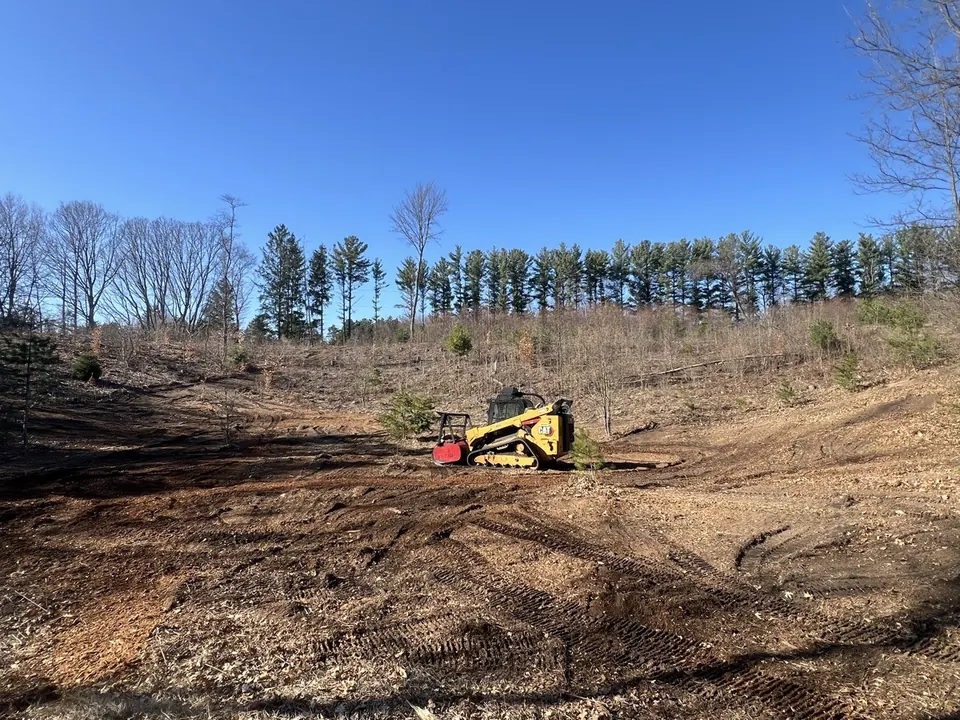
Food Plot Clearing in Michigan: How to Turn Overgrown Ground Into a Plantable Deer Plot
Clearing land for a deer food plot in Southeast Michigan: mulching vs.
Read the guide →Fall and Winter Land Clearing in Michigan: Why the Cold Months Are the Best Time to Mulch
Why Southeast Michigan land clearing often goes best from October to March: frozen ground on wet lots, leaf-off visibility, and what to...
Read the guide →Ready to Get This Done?
Send the address and a few photos through the quote form, or call. You will get one project price for the whole job.