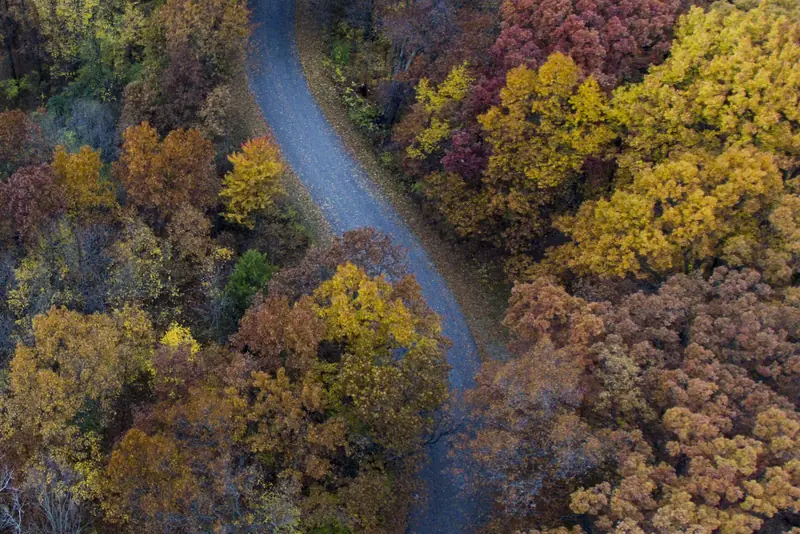
Getting to the stand quietly matters as much as the stand itself. A walking trail from the parking spot that crunches through dry leaves and snaps briars underfoot announces a hunter to every deer within eighty yards, and on parcels across Oakland County's Holly, Groveland and Addison townships, Lapeer County and Livingston County's Hamburg Township, that walk-in is usually the one thing nobody has ever actually built. Most of that ground already has a two-track or a mowed lane somewhere on it, just never a trail sized and routed for a hunter walking in before daylight. A proper access trail is four to five feet wide, routed downwind of where deer bed and travel, and surfaced in mulch instead of leaf litter and deadfall, so the last stretch to the ladder or the blind is as quiet as the stand itself.
Wider trails carry the rest of the property. An ATV or side-by-side trail runs six to eight feet with the overhead trimmed, connecting the barn or the parking area to each stand and linking stands to each other and to the food plot without doubling back past ground you have already hunted. Existing stands, ladder sets and trail cameras are flagged and worked around rather than moved, and a trail is routed to miss them by a comfortable margin instead of brushing past the base of the tree. The mulched surface has no cut stubs or crunchy deadfall on it, which is the actual point: a quiet trail changes how usable a stand is far more than its height or its direction ever will.
Cut trails weeks before the season and they are already part of the landscape by the time you are walking them in the dark, no fresh-cut smell or bright stubs to give away that anything changed. Most access work goes in during the same late-summer window as shooting lanes, so the whole property is settled together before the October 1 opener. Wet ground, low crossings and swamp edges are the exception, held for winter when the ground freezes and the machine can cross without leaving a mark. Our hunting trail guide covers trail widths and layout for every kind of access, and hunting land clearing covers the rest of what a parcel usually needs. Send a trail map or walk the property with us for one project price.
What we clear
- Walking trails four to five feet wide from the parking spot to each stand, routed downwind of bedding cover.
- ATV and side-by-side trails six to eight feet wide, with the overhead trimmed for a cab.
- Connecting trails between stands, and from stands to the food plot, so nothing doubles back through hunted ground.
- Old trails that have grown shut, reopened to their original line.
- Brush-outs around existing ladder stands and box blinds so you can get in, turn and see.
- Trail cameras and stand locations flagged and worked around, not disturbed.
What you get
- A quiet, mulched surface underfoot, with no crunchy deadfall or cut stubs.
- A downwind route into every stand, planned as part of the trail, not an afterthought.
- Stands, blinds and cameras exactly where they were.
- Trails wide enough for the use you actually need, and no wider.
How the Job Goes
Walk the stands and the routes
We look at how you actually get to each stand and where the deer bed and travel.
Lay out the downwind line
Walking and ATV trails are routed to keep your scent off the ground deer use to approach.
Cut and mulch the surface
The trail is ground to a quiet chip surface in the width you need, stand to stand.
Walk it in before the season
Trails cut weeks ahead are already part of the woods by opening day.
When to do it
Most trail work goes in during the weeks before the season, from mid-summer into September, so the ground is settled and quiet again before opening day. Winter, once the ground freezes, is the right time for wet crossings and swamp edges that would rut otherwise. Bundling trail work with lanes or a plot on the same visit is the most efficient way to do all three.
How it is priced
Priced by the project: total trail length, width and how dense the growth is, with travel included in one written price. Walking trails, ATV trails and the connections between them are quoted together as one job. The pricing guide explains what moves the number.
The Ground This Work Happens On


Where We Do This Work
Counties and townships where this job comes up most. Every page covers the local ground and the common jobs.
Questions About This Work
How wide should a walking trail to a stand be?
Four to five feet is enough for one person to walk without brushing brush on both sides. An ATV or side-by-side trail needs six to eight feet with the overhead trimmed so it does not scrape a cab. Shooting lanes are the opposite of a trail: long, narrow and cut low rather than wide.
Can you route the trail around where deer bed?
Yes. Tell us where you have seen deer bedding and traveling, and the trail is routed to approach each stand from downwind and around that cover rather than through it. That routing is usually worth more to how a stand hunts than the stand's exact location.
Will the trail disturb my cameras and existing stands?
No. Flag the cameras, ladder stands and box blinds you already have, and the trail is routed around them with a comfortable margin. Nothing is moved, and the trail typically improves on how you were already walking in by giving you a quieter, more direct route.
How far ahead should trail work be booked before the season?
Most access-trail work is booked from mid-summer on, and the weeks right before the October 1 opener fill first, so reaching out in June or July gets you the widest choice of dates.
Related services
Other jobs we do
Related Guides

Hunting Trail Clearing in Michigan: Access Trails, Shooting Lanes, and Stand Approaches Before Deer Season
Hunting trail and shooting lane clearing in Southeast Michigan. Quiet trails mulched in place, no burn pile, done before the October 1...
Read the guide →
Fall and Winter Land Clearing in Michigan: Why the Cold Months Are the Best Time to Mulch
Why Southeast Michigan land clearing often goes best from October to March: frozen ground on wet lots, leaf-off visibility, and what to...
Read the guide →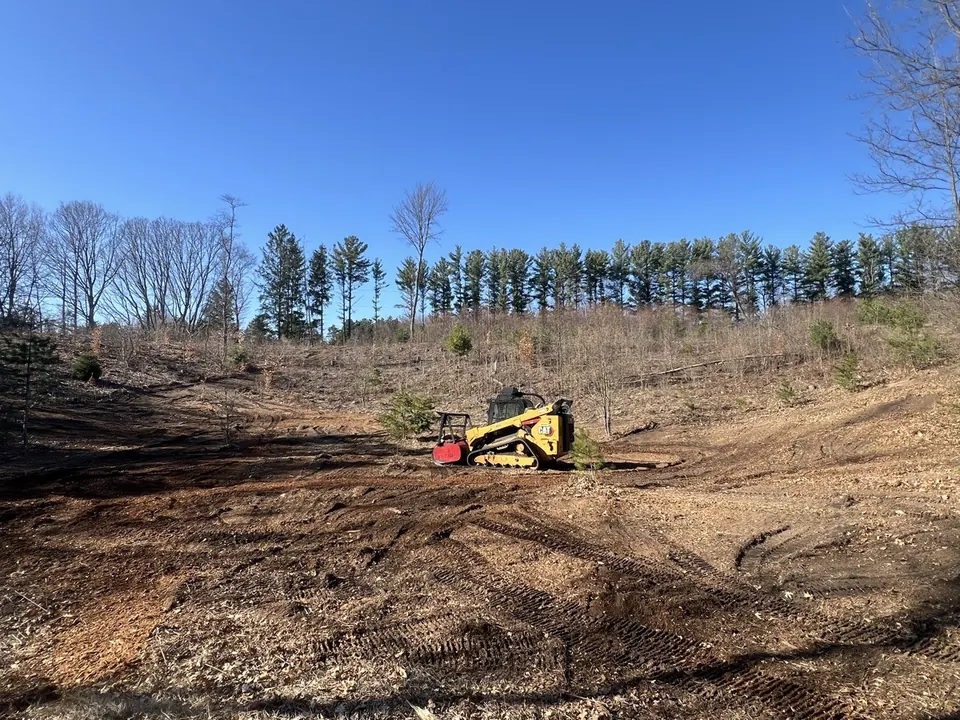
Food Plot Clearing in Michigan: How to Turn Overgrown Ground Into a Plantable Deer Plot
Clearing land for a deer food plot in Southeast Michigan: mulching vs.
Read the guide →Ready to Get This Done?
Send the address and a few photos through the quote form, or call. You will get one project price for the whole job.