
Weed Trees and Trash Trees on Michigan Land: Which to Cut, Which to Keep, and How to Tell Them Apart
The Gibson Environmental Services crew
More than 10 years clearing land, cutting trails, and running forestry equipment in Southeast Michigan.
A weed tree is a tree that adds nothing toward what you want from the land and crowds out the trees that do. Foresters call them cull trees or undesirable trees; landowners call them trash trees; the state wildlife guides to timber stand improvement describe the job of removing them as thinning and clearing the low-value and crowding stems so the valuable trees and the wildlife habitat get the growing space. In Southeast Michigan the usual suspects are box elder, Siberian elm, white mulberry, black locust, tree of heaven, Callery pear, cottonwood and aspen, plus the shrubs that come in under them.
Some of those are invasive and some are native trees that are simply brittle, short-lived or in the wrong place; the difference matters for how hard you work to keep them out. This guide covers how to identify each one, which to cut and which to leave, the trees that are always worth keeping, and how a cull is done on acreage with a forestry mulcher so the keepers are untouched. Our companion guide, which trees stay and which go before mulching, covers how we mark a woodlot before the machine arrives.
The Weed Trees of Southeast Michigan, and How to Tell Them Apart
| Tree | Native or invasive | How to identify it | Why it is on the list |
|---|---|---|---|
| Box elder (a maple) | Native | Compound leaves with three to five leaflets, often mistaken for poison ivy as a seedling; green twigs; paired winged seeds that hang on all winter | Fast, brittle and short-lived; drops limbs in wind and ice; the volunteer tree in most fence rows; hosts box elder bugs |
| Siberian elm | Non-native, invasive | Small, single-toothed leaves an inch or two long; round papery seeds by the thousand in spring; brittle, weeping branch tips | Seeds everywhere, breaks in every storm, stump-sprouts; the elm that grows in a gravel drive |
| White mulberry | Non-native, invasive | Glossy leaves that vary from unlobed to mitten-shaped on one tree; milky sap; birds spread the fruit | Takes over edges and fence rows; messy fruit; crowds natives |
| Black locust | Native to the Appalachians, aggressive here | Paired thorns at the leaf base, compound leaves with round leaflets, deeply furrowed bark, flat brown pods | Root suckers across a field after cutting; thorns puncture tires; forms thickets. Durable wood for posts, which is the one thing in its favor |
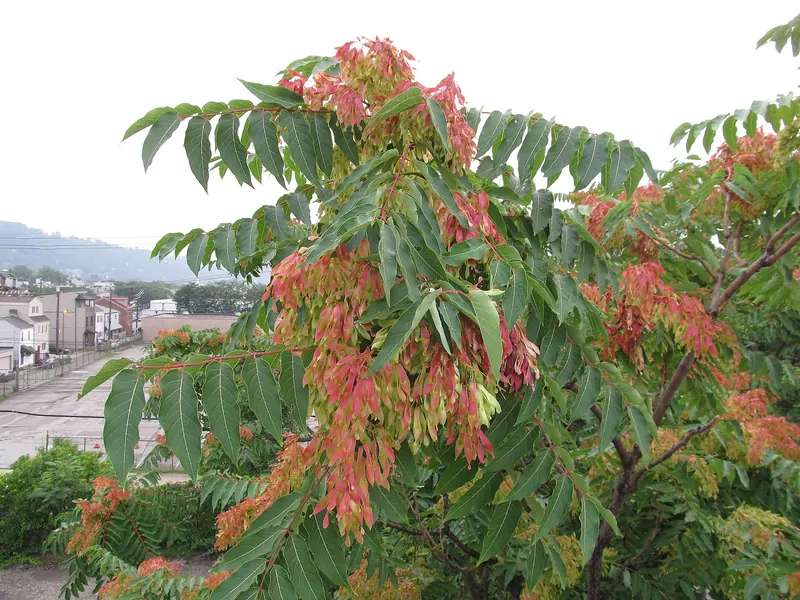
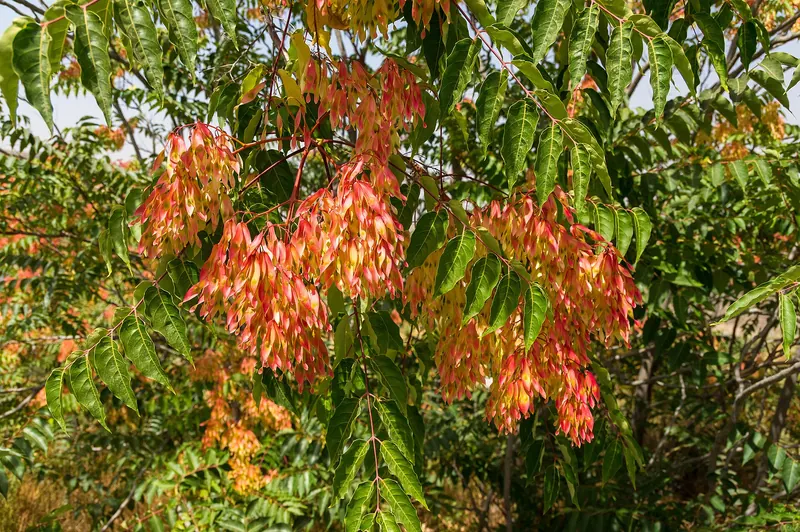
| Tree of heaven | Non-native, invasive | Long compound leaves with a smooth-edged leaflet that has one or two teeth at the base; smells like rancid peanut butter when crushed; smooth gray bark | Root suckers, grows anywhere, and is the preferred host of the spotted lanternfly; see our tree of heaven guide |
| Callery pear (the wild offspring of Bradford pear) | Non-native, invasive | White flowers in April with an unpleasant smell; oval, glossy, round-toothed leaves; the wild seedlings carry sharp thorns the yard trees lack | Seeds into fields and edges in dense thorny thickets; sprouts from the stump |
| Eastern cottonwood | Native | Triangular leaves on a flattened stalk that flutters; deeply furrowed bark; cotton in June | Fine in a river bottom, a nuisance near a house: shallow roots, brittle limbs, fluff; grows faster than anything else here |
| Aspen (quaking and bigtooth) | Native | Round leaves on a flat stalk that shimmer; smooth greenish-white bark | Short-lived and suckers into a clone when cut; valuable as grouse and deer cover if that is what you want |
| Norway maple | Non-native, invasive | Leaf stalk bleeds milky sap when broken; wide, flat crown; the shade under it is dark enough to kill everything | Seeds into woodlots and shades out the oaks and native maples |
| Ash seedlings and dead ash | Native | Opposite compound leaves; the dead ones are the gray skeletons with the bark flaking off | Seedlings come up by the thousand and die young; the standing dead are a hazard. See dead ash trees on your land |
Two more that are shrubs rather than trees fill the ground under all of these: common buckthorn and bush honeysuckle, covered in our guide to the worst invasive plants in Michigan.
Invasive vs Just Low-Value: Why the Difference Matters
An invasive tree, cut, comes back from the roots and from a seed bank that birds and wind keep refilling, so cutting it is the first step of a plan rather than the end of one. Tree of heaven, black locust and Siberian elm are the three to plan around: the extension page on black locust we cite below notes that root sprouting makes it hard to remove and that foresters outside of reclamation work generally treat it as a weedy competitor. A native low-value tree such as box elder or cottonwood is simpler: cut it, mow the sprouts for a summer or two, and it stays gone, and in a river bottom or a wet corner it may be the right tree to leave.
The practical test on a fence row or a woodlot is the one the forestry guides use: what is the land for? On a woodlot managed for timber and wildlife, the weed trees are the ones crowding an oak, a hickory, a cherry or a walnut. On hunting land, a stand of aspen or a thicket of box elder may be the best deer cover on the property. On a lot going to lawn, every one of them goes.
The Trees Worth Keeping
A cull is only as good as what it leaves. Before anything is cut, the keepers are flagged, and in Southeast Michigan the list is consistent:
- Oaks (white, red, black, bur): the best timber, the best acorn crop for deer and turkey, and slow to replace. Every oak that is straight and healthy stays.
- Hickories, black walnut and black cherry: timber value and mast. Cherry is the fast one.
- Sugar maple and red maple: shade, sap, fall color, and a sound trunk is worth keeping.
- Hawthorn, serviceberry, native dogwoods, nannyberry and the other native understory: wildlife food and the look of a real woodlot edge.
- A few standing dead trees away from any target: cavity trees for woodpeckers, owls and squirrels. Our guide to rotten and hazard tree signs covers which dead trees stay and which come down.
The timber-stand guide's rule for a stump that has thrown several sprouts applies here too: keep the straightest one and cull the rest, and it grows into a tree. Crop tree release, the forester's name for cutting whatever crowds the crown of a keeper, is the single most useful thing a cull does.
How a Cull Is Done on Acreage
Walk and flag
We walk the ground with you, flag the keepers with tape, and mark the weed trees and the invasive shrubs. On a woodlot this is the whole job; the cutting is the easy part.
Mulch the understory and the small stems
The forestry mulcher takes the buckthorn, the honeysuckle, the box elder and the sapling-sized weed trees down to the ground between the flagged keepers, and leaves a chip layer instead of a brush pile.
Fell the larger weed trees
Trunks too big to mulch standing are dropped away from the keepers and then mulched, or cut to firewood length and left where you want them.
Plan the sprouts
Tree of heaven, black locust and the elms sprout the next summer. A mowing pass that summer and the next, or a cut-stump treatment the same day, finishes the job. Our guide to stumps after forestry mulching explains which species sprout and how long they keep it up.
Replant the edge
A cleared fence row or edge replanted with natives fills the space the weed trees had. See what to plant after removing buckthorn and honeysuckle.
On a fence row the same work is a corridor: the weed trees and brush ground back to the wire, the keeper trees left on the line, the chips holding the ground. Our guide to overgrown fence lines in Michigan has the widths and the timing.
When to Cull Weed Trees in Michigan
Leaf-off, from late October to the spring thaw, is when a woodlot is readable: the keepers are easy to flag, the ground is firm or frozen, and the machine does the least damage to the soil. Tree of heaven is the exception that sets its own calendar, because cutting it in late summer, when the plant is moving reserves to the roots, gives the least sprouting; the timber-stand guide schedules it that way. Callery pear and the buckthorns are easiest to find in April, when the pear blooms white and the buckthorn leafs out first, and in late fall, when the buckthorn holds its leaves after everything else has dropped. Our 12-month clearing calendar for Michigan puts all of this in one table.
Common Questions
What is a weed tree called?
Foresters say cull tree or undesirable tree, and call the work of removing them timber stand improvement or crop tree release. Landowners say trash tree or junk tree. All of them mean a tree that adds nothing toward what the land is for and crowds out the trees that do.
What are the worst weed trees in Michigan?
For spreading: tree of heaven, black locust, Siberian elm, white mulberry, Callery pear and Norway maple, all non-native and all back from the roots or the seed bank after a cut. For breaking: box elder and cottonwood, native and brittle. For sheer numbers: ash seedlings and buckthorn.
What invasive trees are present in Michigan?
Tree of heaven, Siberian elm, white mulberry, Norway maple, Callery pear and black locust are the ones that seed into fence rows and woodlots across Southeast Michigan, with common and glossy buckthorn, bush honeysuckle and autumn olive forming the shrub layer under them.
Is box elder a trash tree?
It is a native maple that is fast, brittle and short-lived, so near a house, a drive or a fence it is on the cut list. In a wet corner or a river bottom it is doing a job and can stay. It mows out easily once cut; a summer of sprouts and it is gone.
How do I get rid of black locust or tree of heaven for good?
Cut, then plan for root suckers. Both throw sprouts across the whole root zone the summer after a cut, so the job is a cut followed by mowing the sprouts for three or four summers, or a late-summer cut with a stump treatment the same day. Tree of heaven cut in late summer sprouts least.
How do I know which trees to keep?
Walk the ground with what you want from it in mind. For timber and wildlife, keep every sound oak, hickory, cherry, walnut and maple and whatever crowds their crowns goes. For hunting cover, aspen and thickets may stay. For a lawn, little stays. We flag the keepers with you before anything is cut.
Can weed trees be mulched instead of cut and hauled?
Yes. A forestry mulcher takes sapling and small-tree weed trees down to the ground between the flagged keepers and leaves chips rather than a pile. Larger trunks are felled first and then mulched or cut to firewood length.
Sources and Further Reading
The forestry vocabulary, the stump-sprout rule and the tree of heaven timing come from these sources. Identification features are the standard ones in the Penn State and Minnesota pages listed.
Virginia Department of Wildlife Resources: Timber Stand Improvement for Wildlife
Mississippi State University Extension: Timber Stand Improvement (P1281)
University of Minnesota Extension: Black locust (identify invasive species)
Penn State Extension: Callery Pear: Accurate Identification
Michigan Invasive Species Program: Tree of heaven
Where We Do This Work
The work in this guide is done across eight Southeast Michigan counties from our base in Royal Oak. Every county page lists the townships we work in most, with a page for each.
Fence Row or Woodlot Full of Weed Trees?
We walk it with you, flag the keepers and take the rest down to the ground. The quote is free.