
Forestry Mulching vs Excavator Clearing: How to Choose the Right Way to Clear Land
The Gibson Environmental Services crew
More than 10 years clearing land, cutting trails, and running forestry equipment in Southeast Michigan.
There are two common ways to clear a wooded or overgrown parcel. The traditional way sends in an excavator or bulldozer to pull the trees out by the roots, push them into piles, and burn, haul or grind the piles. The other way is forestry mulching: a mulching head on a tracked machine grinds the brush and trees where they stand and leaves the chips on the ground. We run the second kind of machine across Southeast Michigan.
Neither method is better everywhere, and on a lot headed for a house the two often work together. This guide shows how each one works, sets them side by side, and covers which fits which job. If you are weighing mulching against mowing instead, see the mulching vs brush hogging comparison.
Two Ways to Clear the Same Acre
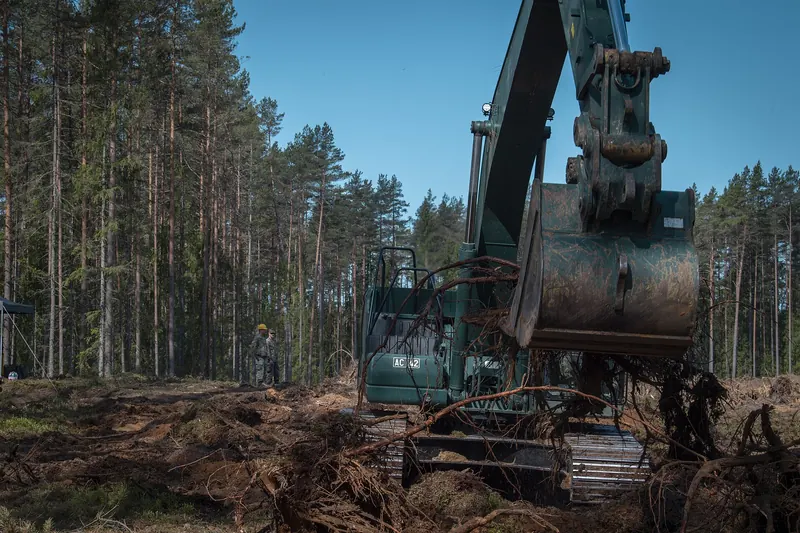
Excavator and bulldozer clearing take the tree and its roots out of the ground. Forestry mulching grinds the tree to chips where it stands and leaves the roots in the soil. Nearly everything else in this guide follows from that one difference.
So is forestry mulching better than clearing? It is better for opening ground and keeping the soil in place. Pulling is better where something will be built or dug on the spot.
How Excavator Clearing Works
This is the traditional method, done by excavation contractors, and each stage adds machine time.
1. Pull
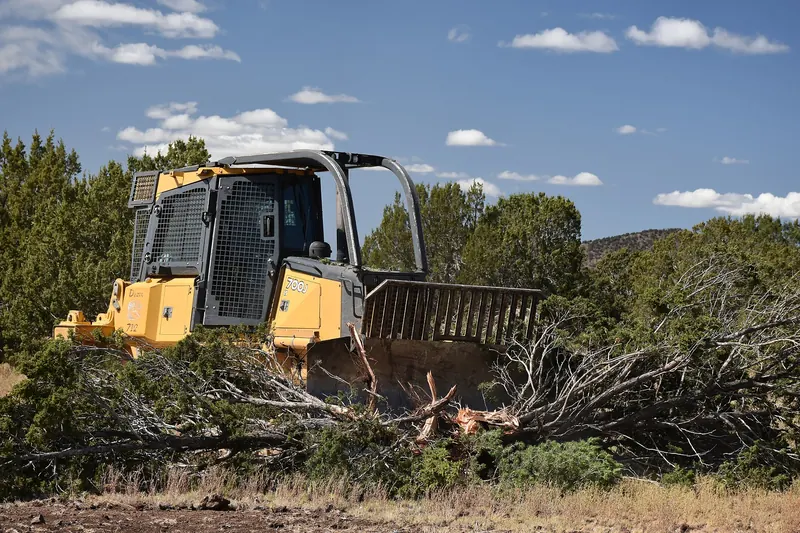
The excavator grabs each tree and stump and pulls it out of the ground with the roots. On larger, more open ground a bulldozer does the same work.
2. Pile
The trees, stumps and brush are pushed into piles. Big piles take up room and wait on the next step.
3. Burn, haul or grind
The piles are burned on site, hauled away or run through a grinder. This stage is where the extra days and the extra trucking come in.
4. Grade
What is left is bare, torn-up ground, so it is graded smooth. Heavy machines compact wet soil.
5. Seed
The graded dirt is seeded so something grows on it. Until the seed takes hold, bare soil is open to rain and runoff.
How Forestry Mulching Works
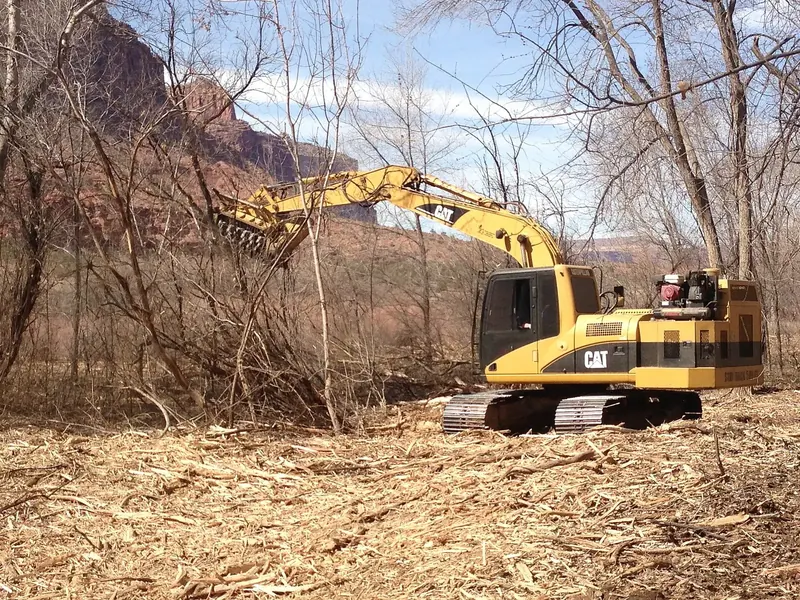
Mulching is one pass. We run a FECON forestry mulching head on a Bobcat T86, a high-flow tracked skid steer on rubber tracks. The drum grinds brush and trees up to roughly 6-8 inches at the stem, and larger trees are taken down in pieces.
The tree stays on the property as chips. The chip layer is typically 2-4 inches deep in medium brush, and stumps are ground flush to the ground. Nothing is piled, hauled or burned, so the ground is walkable and mowable the same day. The forestry mulching page covers the method in full.
The Side-by-Side
| Excavator clearing | Forestry mulching | |
|---|---|---|
| What happens to the trees | Pulled out whole with the roots and pushed into piles | Ground to chips where they stand |
| Stumps and roots | Stumps and roots come out of the ground | Stumps ground flush; the roots stay in the soil |
| What the ground looks like after | Bare, disturbed soil, graded and seeded | A chip layer, walkable and mowable the same day |
| Debris | Piles to burn, haul or grind | None; the trees stay as chips |
| Soil disturbance and erosion | High: bare dirt, and heavy machines compact wet soil | Low: the roots hold the soil and the chips cover it |
| Days on site | More machine hours, passes and days, plus hauling | Usually a day or two for a few acres of brush |
| Follow-up work | Grading, seeding and disposing of the piles | A follow-up pass or mowing for species that resprout |
| Best use | A foundation, driveway base, septic field or pond, or ground where every stump must come out | Opening wooded or overgrown ground, fields, trails, fence lines and lots |
When Excavator Clearing Is the Right Choice
A foundation or driveway base
A building pad needs the stumps and roots out and the soil dug, graded and compacted. That is excavator work, and the builder's crew does it as part of the dig.
A septic field or a pond
Both are dug, so the machine that digs them clears the ground as it goes. The stumps come out in the same pass as the excavation.
Every stump and root must come out
Some projects call for bare, root-free soil, like a graded building site. Pulling the stumps and roots is the way to get there.
Trees too large to grind in place
Mulching takes trees up to roughly 6-8 inches at the stem in one pass and larger ones down in pieces. A stand of big timber suits an excavator and a dozer, which can pull and pile large trunks.
When Forestry Mulching Is the Right Choice
Opening a wooded or overgrown parcel
Thick brush and small trees go to chips in one pass, and you can walk the property the same day.
Taking back a field or pasture
Fields that have filled in with brush and saplings go back to open ground with no brush piles. The pasture reclamation page covers field work.
Hunting land
Trails, shooting lanes, openings and food plot sites are cut without leaving bare dirt that washes. The chips can be left, spread thinner, raked into rows or pushed to trail edges. See hunting land clearing.
Lot clearing ahead of a build
Mulching opens the lot so the builder can walk it and the excavator can reach it, and the dig that follows starts on open ground.
Fence lines and property lines
A tracked machine runs the line and takes the brush off both sides, leaving a clear strip with chips underfoot.
Slopes and soft ground
A tracked machine works on slopes, in tight spots and on soft ground, and wet corners are done on frozen ground in winter. The roots left in the soil hold a slope, and the chips keep the mud down.
Invasive brush
Buckthorn, autumn olive and honeysuckle are ground at the stem. Species that resprout, those three and also box elder and willow, send up shoots the next season, and a follow-up pass or regular mowing finishes them.
The Combination Most Lots Get
On a lot headed for a house, the two methods usually work together. Mulch first. The brush and small trees go to chips, the lot opens up, and the builder can see it and walk it. Then the builder's excavator pulls only the stumps inside the building footprint, as part of the dig.
That order is faster and cleaner. The excavator starts on open ground instead of working through a thicket, with no brush piles to move, haul or burn. The rest of the lot keeps its chip layer and its roots, so there is no bare dirt to wash, and trees you want to keep can be left standing.
The chip layer is not a base for anything built, so the chips on the pad, the driveway and the septic field are stripped in the dig. See new home site clearing and site preparation, and the guide to clearing a lot for a new house for the full sequence.
What Each Leaves You With a Year Later
A year after mulching
The chip layer is breaking down into the soil, over about 1-3 years depending on depth and wood. Grass and clover come back through a thin layer on their own, and the layer held down weeds and seedlings the first season.
Seeding after mulching
At the surface, chips tie up some nitrogen for a while, so grass seeded straight into a deep layer comes in slowly. A thin layer or raked rows take seed well. For a lawn or a food plot, the layer is raked, dragged or disked and then seeded.
A year after excavator clearing
The ground is graded dirt that was seeded, and how it looks depends on how well the seed took. Bare soil is open to rain until grass covers it, and ground compacted when it was wet is harder on new grass.
The what happens to the mulch guide follows the chips through the first few years, and the grass regrowth guide covers how and when grass returns.
What It Costs
Every mulching job is one written project price, from photos or a walk-through, with travel included. Forestry mulching usually costs less than clearing and hauling the same brush, because nothing is hauled or burned.
The excavator stage of a build is the builder's quote, priced with the dig. Mulching first shortens that stage, because the excavator starts on open ground with only the stumps to pull. The forestry mulching pricing guide explains what moves the price of a mulching job.
Common Questions
Can you build a house on land that was forestry mulched?
Yes. The lot is mulched to open it, then the builder's excavator strips the chips and pulls the stumps inside the building footprint as part of the dig. The rest of the lot keeps its chip layer.
Does forestry mulching remove stumps?
It grinds them flush with the ground. The roots stay in the soil, where they hold it in place. A stump inside a building footprint is pulled by the excavator in the dig.
Is forestry mulching bad for the soil?
No. The roots stay in the ground and hold the soil, and the chip layer covers it, which keeps mud and erosion down. The chips break down over about 1-3 years and add organic matter.
How long does each method take on a few acres?
Forestry mulching usually takes a day or two for a few acres of brush, and the ground is walkable when the machine leaves. Excavator clearing takes more days, because the trees are pulled and piled, the piles are burned, hauled or ground, and the ground is graded afterward.
Which is better for a hunting property?
Forestry mulching suits most hunting land. It cuts trails, lanes and openings without leaving bare dirt or brush piles. A pond or a building pad on the same property is excavator work.
Can you tell from photos which one my land needs?
Usually. Send a few photos and the address, and we will tell you what mulching would do on your ground and what would still need an excavator.
Sources and Further Reading
Forestry mulching is called mastication in the research literature. These are the published references that line up with what we see on the ground, for anyone who wants more depth.
U.S. Forest Service, Rocky Mountain Research Station: To masticate or not: useful tips for treating forest, woodland, and shrubland vegetation
Joint Fire Science Program, Colorado State University: Mastication effects on fuels, plants, and soils in four western U.S. ecosystems
Where We Do This Work
The work in this guide is done across eight Southeast Michigan counties from our base in Royal Oak. Every county page lists the townships we work in most, with a page for each.
Deciding How to Clear a Parcel?
Send a few photos and the address. We will tell you what mulching would do on your ground, what would still need an excavator, and give you one written price, travel included.