Forestry Mulching vs Brush Hogging: Which One Your Property Needs
The Gibson Environmental Services crew
More than 10 years clearing land, cutting trails, and running forestry equipment in Southeast Michigan.
Brush hogging and forestry mulching both clear overgrowth, so the names get swapped as if they meant the same job. They are different jobs with different results. One cuts the growth down and leaves it lying. The other grinds it into chips and takes the stumps too.
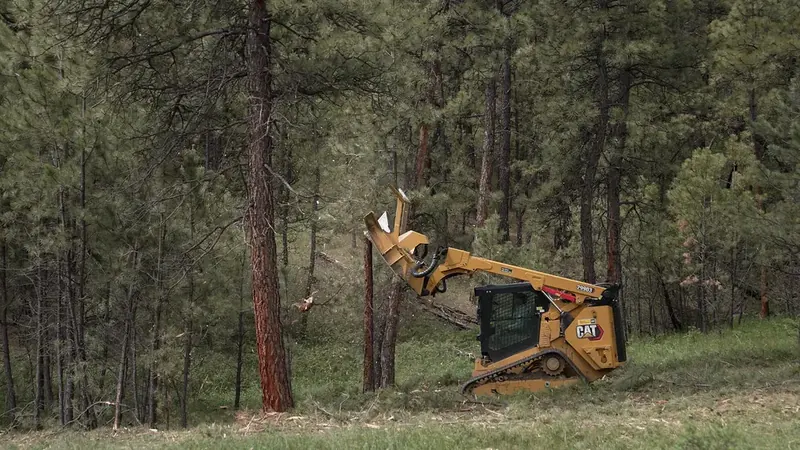
We do both with the same machine, a Bobcat T86 high-flow tracked skid steer. Brush hogging uses a rotary cutter on it. Forestry mulching uses a FECON drum mulcher on it. So the choice is about your ground and what you want it to be, not about which machine shows up.
The Short Answer
Choose brush hogging when the growth is grass, weeds, brush and saplings up to about 3 inches thick and you want it cut down fast and kept down. It suits fields, lanes, trails and fence lines, and it usually costs less per acre.
Choose forestry mulching when the growth is thicker, the stumps have to go or the ground should look finished. It grinds brush and trees up to roughly 6-8 inches at the stem, takes stumps flush and leaves a chip layer you can walk on the same day.
What Brush Hogging Is
Brush hogging cuts standing growth with a rotary cutter: a heavy deck with blades spinning flat to the ground, pushed into the growth on the front of the skid steer. It is also called bush hogging or brush mowing.
It cuts grass, weeds, brush and saplings up to about 3 inches thick, a few inches above the ground. The cut material is left lying in lengths, not chips, with stubs standing. Stumps and root crowns are untouched. The brush hogging page covers the service.
What Forestry Mulching Is
Forestry mulching grinds standing growth where it stands. A drum with carbide teeth takes brush and trees up to roughly 6-8 inches at the stem in one pass, larger trees in pieces, and grinds stumps flush to the ground.
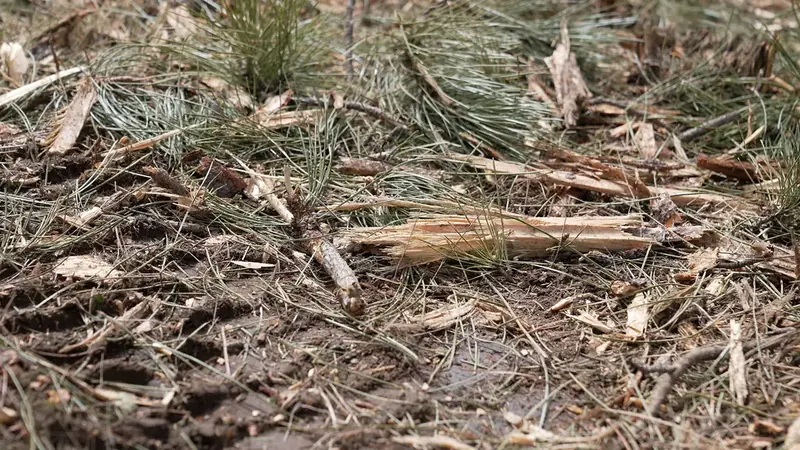
A chip layer is left, typically 2-4 inches deep in medium brush. Nothing is piled, hauled or burned, and the ground is walkable the same day. The forestry mulching page covers the service.
The Side-by-Side
The two services, row by row.
| Brush hogging | Forestry mulching | |
|---|---|---|
| What it handles | Grass, weeds, brush and saplings up to about 3 inches | Brush and trees up to roughly 6-8 inches at the stem; larger trees in pieces |
| What it leaves behind | Cut lengths and stubs a few inches high | A chip layer, typically 2-4 inches deep |
| Stumps | Untouched | Ground flush |
| How the ground looks after | A cut field with stubble | A finer finish, walkable the same day |
| Speed on grass and light brush | Fastest per acre | Slower per acre |
| Speed in thick brush | Held back by stems past about 3 inches | Much faster than cutting and hauling |
| How long the result lasts | Roots stay, so growth returns; cut once or twice a year | The stand is gone to the stumps; resprouters shoot back the next season |
| Cost per acre | Usually less | Usually more |
| Best for | Keeping open ground open | Opening overgrown ground and a clean finish |
Advantages of Brush Hogging
The fastest way to cut open ground
On grass, weeds and light brush it is the fastest method per acre. A large field or a long lane is a short visit.
Costs less per acre on grass and light brush
A pass usually costs less than a mulching pass on the same ground. You pay for cutting, not for grinding the job does not need.
Keeps a field, lane or trail open year after year
Cut once or twice a year, cleared ground stays cleared. The cutter takes seedlings before they thicken.
Light on the ground
Cutting a few inches up leaves the roots and sod in place, with no bare dirt. The tracked machine works on slopes and soft ground.
Quick to schedule and repeat
A cutting job is a short visit. It is easy to put on the calendar once or twice a year.
Disadvantages of Brush Hogging
It leaves stubs and cut lengths
The cut material lies where it falls and the stems stand a few inches high. It is a cut field, not a finished surface.
Roots and stumps stay, so it has to be repeated
Species that resprout come back the next season and are cut again. Brush hogging is a yearly job, not a one-time fix.
Stems past about 3 inches are beyond it
Thick or woody growth needs mulching. A field gone to larger brush and small trees is a mulching job first.
It is not the finish for a lot or yard edge
Stubble and lengths are fine in a field and rough on ground you will walk across. A lot or yard edge looks finished with the stumps flush and a chip surface.
Advantages of Forestry Mulching
Takes brush and small trees in one pass
Brush and trees up to roughly 6-8 inches at the stem are ground standing, and larger trees come down in pieces. Nothing is felled first.
Stumps flush and a clean finish the same day
The surface is chips, not stubs. The ground is walkable and mowable the same day.
Nothing piled, hauled or burned
The growth is ground where it stands. There is no brush pile to haul away or burn.
The chips protect the soil and break down
The roots stay in the soil, so there is little erosion and no bare dirt. The layer holds slopes and keeps mud down, then breaks down into the soil; what happens to the mulch after forestry mulching covers that stage.
One pass resets ground that has not been touched for years
A parcel gone to brush, saplings and old stumps comes back to a clear surface in one pass. After that, yearly brush hogging keeps it that way.
Disadvantages of Forestry Mulching
Slower per acre on grass and light brush
A mulching pass moves more slowly than a brush hogging pass on open ground. On growth a cutter takes easily, grinding is more work than the job needs.
Costs more per acre, so it is more than open ground needs
Mulching is priced by the acre and the density of the growth, and it usually costs more than brush hogging on the same ground. On grass and light brush, that extra work buys a finish you may not need.
The roots stay in the soil, so resprouters come back
Buckthorn, autumn olive, honeysuckle, box elder and willow send up shoots the next season. A follow-up pass or yearly brush hogging finishes them.
When You Need Brush Hogging, and When You Do Not
Brush hogging is right when the growth is within its reach and the finish can be rough. It is the wrong fit for thick stems, stumps that have to go and ground that will be built on.
| You need brush hogging when | It is the wrong fit when |
|---|---|
| The growth is grass, weeds, brush and saplings up to about 3 inches | The thickest stems are past about 3 inches |
| A field, lane or fence line needs keeping open every year | The ground has not been touched for years and is thick brush and small trees |
| You want a quick knock-down of light growth | You want the stumps gone and a clean surface |
| A mulched parcel has shoots coming back from the roots | The ground will be built on or landscaped |
When You Need Forestry Mulching, and When You Do Not
Forestry mulching is right when the growth is thick, the stumps matter or the ground should look finished. A field gone to autumn olive or buckthorn is the clearest case; the autumn olive guide and the buckthorn guide cover what comes back. A lot that will be built on starts here too, and new home site clearing covers the order of work.
| You need forestry mulching when | It is the wrong fit when |
|---|---|
| Stems run past about 3 inches, up to roughly 6-8 inches at the stem | The ground is open grass and light brush |
| A field has gone to autumn olive, buckthorn or other dense brush | You only need a cleared lane or trail kept open |
| Stumps have to go flush and the surface should be clean and walkable | Every stump and root must come out for a foundation or septic field; the builder's excavator pulls those in the dig, and mulching first makes that dig faster |
| The parcel has not been touched for years | The ground is cut every year and the growth stays light |
How to Choose: Four Questions
Four questions usually settle it.
How thick is the thickest stem?
Look at the thickest growth, not the average. Up to about 3 inches is brush hogging. Up to roughly 6-8 inches at the stem is mulching.
What do you want the ground to look like?
Cut lengths and stubs suit a field, lane or hunting parcel. A chip surface with the stumps flush suits a lot, a yard edge or ground you will walk across.
What is the ground for next?
Ground that stays open points to brush hogging. Ground that will be seeded or built on points to mulching.
How often will it be kept up?
Ground cut every year can be held open with brush hogging alone. Ground untouched for years usually starts with a mulching pass, then goes on a cutting schedule.
Using Both on One Property
Most overgrown parcels end up needing both, in order. Mulch once to take the ground back to a clear, walkable surface. Then brush hog every year to keep it that way.
A common sequence: forestry mulching grinds the shrubs, saplings and stumps. The next summer, brush hogging takes the shoots that came back from the roots. After that, one or two passes a year holds the ground open, with the same crew and machine each time.
The Lapeer County brush hogging page shows the yearly cutting locally, and the hunting land clearing page shows how the two fit together on hunting parcels.
What It Costs
Every job is one written project price, from photos or a walk-through, with travel included. Brush hogging usually costs less per acre than mulching on the same open ground.
Mulching is priced by the acre and the density of the growth. The forestry mulching pricing guide explains what moves the number.
Common Questions
Is brush hogging the same as bush hogging?
Yes. Bush hogging is the common spoken name for brush hogging, and brush mowing is another.
Can brush hogging take down small trees?
Yes, saplings and brush up to about 3 inches thick. Thicker stems and larger trees are forestry mulching work.
Does forestry mulching leave stumps?
Stumps are ground flush to the ground. Where a builder needs every stump and root out, the excavator pulls them in the dig, and mulching first makes that dig faster.
Will the brush come back after either one?
Some of it, because the roots stay in the soil either way. Resprouting species such as buckthorn, autumn olive, honeysuckle, box elder and willow send up shoots the next season, and a follow-up pass or yearly brush hogging finishes them.
Which one is faster, and which costs less?
Brush hogging is faster per acre on grass and light brush and usually costs less. In thick brush, forestry mulching is much faster than cutting and hauling.
Can you tell from photos which one my property needs?
Usually. Send a photo of the thickest growth and a wide shot of the whole area, with the address, and we will tell you which one the job calls for.
Sources and Further Reading
Forestry mulching is called mastication in the research literature. These are the published references that line up with what we see on the ground, for anyone who wants more depth.
U.S. Forest Service, Rocky Mountain Research Station: To masticate or not: useful tips for treating forest, woodland, and shrubland vegetation
U.S. Forest Service, Science You Can Use: Is mastication right for your site?
Where We Do This Work
The work in this guide is done across eight Southeast Michigan counties from our base in Royal Oak. Every county page lists the townships we work in most, with a page for each.
Not Sure Which One Your Property Needs?
Send a few photos of the growth and the address. We will tell you whether it is a brush hogging job, a mulching job or both, and give you one written price, travel included.