
Fall Brush Hogging in Michigan: What to Cut Before the Snow, and What to Leave
The Gibson Environmental Services crew
More than 10 years clearing land, cutting trails, and running forestry equipment in Southeast Michigan.
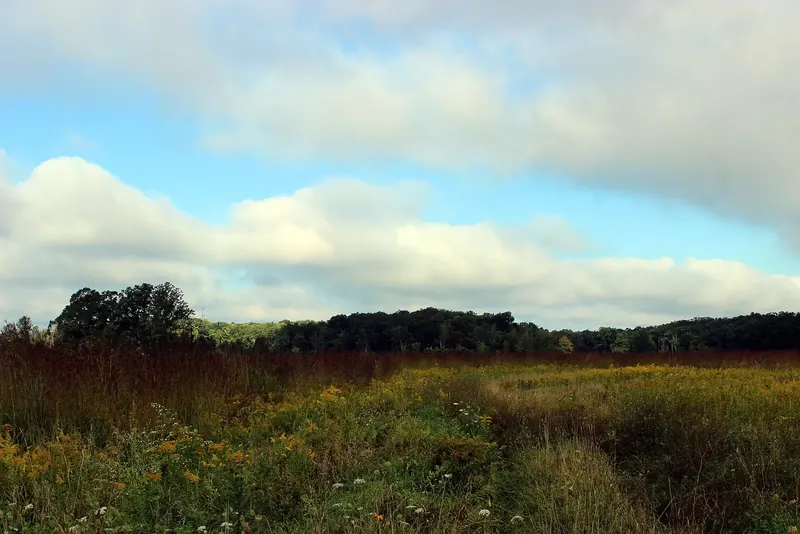
Every fall the same question comes up: take one last cut of the field before snow, or wait for spring? For most fields of grass, weeds and thin brush, cut it. For a field of thick woody stems, a brush hog is the wrong size of tool, and the question changes.
This guide gives you the decision rule, what a fall cut does, which brush comes back harder, and when a field has outgrown a brush hog. If you have your own tractor and brush hog, you can use all of it. If the field is bigger than your equipment, our brush hogging service does the cutting.
The Short Answer: Mow Now or Wait for Spring
Look at what is standing. If it is grass, tall weeds and saplings up to about 3 inches thick, mow it now. If you plan to plant, fence or build in spring, mow it now. If the stems are thicker, or the stand is too dense to walk, a fall cut only lays the brush over for winter and the field needs a different job. If you hunt the property, mow strips and leave the rest. If the ground is soft clay or standing water, wait until it firms up or freezes.
What a Fall Cut Is Good For
Keeps snow from matting the field
Tall grass and weed stalks lie down under snow and press into a wet mat. The mat is slow to dry in spring, and new grass has to push through it. Short stubble holds up better.
Shows the ground before snow hides it
With the tall growth down, holes, stumps, rock piles, fence wire and wet spots show. Find them now, not by surprise in spring.
Opens the view for spring work
A cut field lets you walk the property and decide where a fence, planting, pad or trail will go. Spring work then starts on open ground.
What Brush Hogging Takes, and What Is Past It
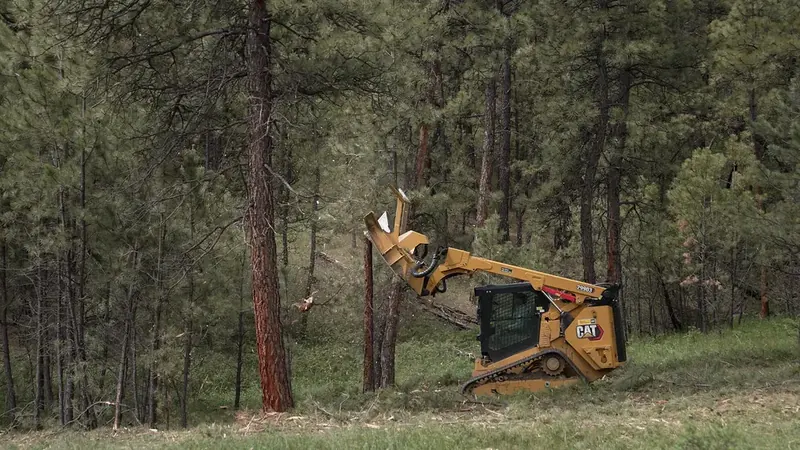
A brush hog is a rotary cutter, and it is the right tool for a lot of fields. It takes grass, weeds, brush and saplings up to about 3 inches thick and cuts a few inches above the ground. That covers most overgrown pasture, hay ground and field edges.
Past about 3 inches the stems are too thick for a rotary cutter to take clean. They bend, split or stall it, and that is where forestry mulching fits.
Before you hitch up, walk the field. Look for stumps, rocks, fence wire, old posts, soft ground and anything left in the weeds. A hidden stump or rock is the usual way a cutter gets damaged. Flag each one and mow around it.
Fall Cut, Spring Cut, Summer Cut
What each cut leaves and what comes back:
| Cut | What it leaves | What regrows | What it sets up |
|---|---|---|---|
| Fall cut | Short stubble, with the field open and easy to see. | Little top growth before winter. Resprouting brush sends up shoots in spring. | A clear look at the ground, and a field ready for spring planting, fencing or building. |
| Spring cut | Old flattened growth cut up as new growth starts. | Grass and weeds fill back in fast once the ground warms. | Early open ground, though soft spring soil can limit when a machine can get in. |
| Summer cut | A heavy layer of green clippings. | The fastest regrowth. Grass and weeds are back in a few weeks, and brush resprouts. | A tidy field through the growing season, and weeds knocked down before they go to seed. |
One or two cuts a year is the usual rhythm, and the late-season cut is the one that sets up the next year.
The Brush That Comes Back Harder
Mowing takes off the top of a plant and leaves the root. Autumn olive, buckthorn, bush honeysuckle and multiflora rose all resprout from the cut stem or root, often with several new stems where there was one. Mow and stop there, and next year the patch is thicker. Count a fall cut as step one and plan a follow-up.
Buckthorn and honeysuckle hold green leaves late, so fall is a good time to find them. Tie flagging tape on each one before you cut.
Autumn olive
A wide shrub with silvery leaves and red berries. A cut stump resprouts heavily and comes back as a clump. The autumn olive guide covers the follow-up.
Buckthorn
Dark leaves that stay green late into fall, so it is easy to spot. A cut stem sends up several shoots. The buckthorn guide covers what to do next.
Bush honeysuckle
It leafs out early and holds its leaves late, so it shows when the woods are bare. It resprouts from cut stems. The bush honeysuckle guide covers the follow-up.
Multiflora rose
Thorny, arching canes that can root where the tip touches the ground. A mowed patch becomes a tangle of stubs and fresh canes. The multiflora rose guide explains the approach.
Cutting Height and Ground Conditions
A brush hog cuts a few inches above the ground, and that is the right height. Lower and the cutter digs at the dirt, scalps the sod and meets every rock and stump. Higher leaves long stems that tangle.
Ground comes before the calendar. Soft clay and wet spots rut under heavy equipment, and the ruts stay all winter. Our tracked machine spreads its weight, and we still wait for soft ground to firm up or freeze. Fallen leaves hide rocks, holes and stumps along edges and under trees, so walk those areas first.
Stop for the year when the ground stays soft or snow covers the field. A cut in mud is not worth the ruts.
If You Hunt the Property: Cut Lanes, Leave Cover
A field mowed edge to edge holds little cover. A field left all weeds is hard to walk and hunt. The answer is usually both: cut strips, leave strips.
Cut lanes for walking and viewing
Mow lanes along the edge or through the middle so you can walk in quietly and see across the field. Curved lanes look more natural than straight runs.
Leave cover in strips and corners
Leave standing grass and brush along fence rows, in thick corners and along the woods edge. Those spots hold game and birds through winter.
We can cut to your layout. Tell us which strips to mow and which to leave.
When the Field Has Gone Past Mowing
A brush hog is the right tool until the stems outgrow it. Signs the field has gone past mowing: stems thicker than about 3 inches, brush so dense you push through it, young trees that have shaded out the grass, or stubs from the last cut that bend and catch instead of cutting clean.
That is a forestry mulching job. Forestry mulching grinds brush and trees up to roughly 6-8 inches at the stem, takes larger trees down in pieces, grinds stumps flush and leaves a chip layer typically 2-4 inches deep. We run a FECON drum mulcher on the same tracked skid steer. Nothing is piled or burned.
Many fields are a mix: open ground and one thick corner. Those get both, brush hogging on the open ground and mulching on the dense stand, on one written price. Forestry mulching versus brush hogging compares the two, and the fall and winter land clearing guide covers mulching once the leaves are down.
Keeping the Field Open Next Year
A simple rhythm keeps most fields open: one late-season cut every year, plus an earlier cut if the field fills in fast.
Between cuts, walk the edges, where brush creeps in along fence lines and tree lines. Look for the green shoots you flagged in the fall, coming up from the cut stems. Cut them small and the patch never gets a head start.
Fall Brush Hogging Across Southeast Michigan
We work from a base in Royal Oak across Oakland, Macomb, Wayne, Livingston, Lapeer, St. Clair, Washtenaw and Genesee counties. That includes Metamora, Dryden, Imlay City and Almont in Lapeer County, Capac, Yale and Memphis in St. Clair County, Goodrich, Davison and Otisville in Genesee County, Ortonville, Oxford and Holly in north Oakland, and Howell and Hartland in Livingston County.
Each county has its own page: brush hogging in Lapeer County, brush hogging in St. Clair County and brush hogging in Genesee County.
For a quote, send photos of the field and the address, or have us walk it. You get one written project price, travel included. Calls are answered 8 AM to 8 PM seven days a week, and forms and texts within one business day.
Common Questions
Should I mow my field in the fall?
For most fields, yes. A late cut keeps snow from matting tall growth, shows you the ground and sets up spring work.
Will saplings grow back if I cut them in the fall?
Many will. Cutting removes the top and leaves the root, so buckthorn, autumn olive and honeysuckle send up new shoots in spring. A fall cut is a good first step that needs a follow-up.
How thick a stem can a brush hog cut?
Brush hogging takes grass, weeds, brush and saplings up to about 3 inches thick. Thicker stems are a forestry mulching job, which handles roughly 6-8 inches at the stem.
How late in the year can a field be cut?
As late as the ground is firm and snow is not covering the field. Soft clay and wet spots wait until the ground firms up or freezes.
Should I mow the whole field if I hunt it?
Usually not. Cut lanes for walking and viewing, and leave standing cover along fence rows, corners and the woods edge.
Where We Do This Work
The work in this guide is done across eight Southeast Michigan counties from our base in Royal Oak. Every county page lists the townships we work in most, with a page for each.
Want the Field Cut Before the Snow?
Send a few photos of the field and the address. We will tell you whether it is a brush hogging job, a mulching job or both, and give you one written price, travel included.