
Home›Service Areas›Lapeer County›Almont
Land Clearing & Forestry Mulching in Almont, Michigan
Forestry mulching, brush hogging and lot clearing in Almont Township, about 50 minutes from our base in Royal Oak.
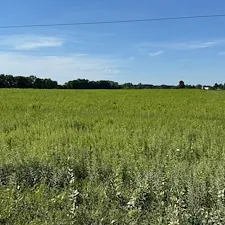
Almont is the southeast corner of Lapeer County, where the hills around Hadley and Dryden have flattened into open farm country. The township covers about thirty-seven square miles of hay, corn and bean ground cut into squares by the road grid, with the Village of Almont in the middle where M-53, which everyone here still calls Van Dyke, meets St. Clair Street. The village was settled in 1828 and platted in 1836, so the oldest fence rows and woodlot edges have had close to two centuries to thicken up. Romeo and Bruce Township sit just south of the county line, Dryden is northwest, Imlay City is north and Capac is off to the northeast.
Our shop is in Royal Oak, about fifty minutes down Van Dyke, and the owner who answers the phone is the one who runs the machine. We bring one high-flow tracked skid steer with a FECON forestry mulcher and a brush hog attachment for the same machine, so a single visit can grind a hedgerow of box elder and grapevine, mow the old hay field behind it and open the site for a barn. Everything is ground where it stands into a chip layer, with nothing to stack, burn or haul.
Every Almont job gets one flat project price after a walk-through or a set of photos, with the drive from Royal Oak and the condition of the ground already in it. The sections below cover each kind of work we do in Almont Township, how a job runs here, and the time of year that suits each one. If you would rather just talk it through, call (810) 776-8524 between 8 AM and 8 PM any day of the week, or send the address through the quote form.
Where we work in Almont Township: the Village of Almont and the Van Dyke (M-53), Dryden, Bordman, Almont, Howland, Sandhill, Hough, Bishop, Kidder, Tubspring, Shoemaker, Scotch Settlement and Hollow Corners road corridors, plus the Bruce Township and Berlin Township edges just over the county lines.
What We Do in Almont
Each service, and why it comes up on this ground.
Fence row and hedgerow clearing
This is the signature Almont job. A row that was a line of posts and a few elms fifty years ago is now a thirty- or forty-foot band of box elder, mulberry, honeysuckle and wild grape that shades the first rows of crop on both sides. We grind it back to the survey line or the line you flag, leave the roots in the ground to rot, and finish with a chip strip the planter or the mower can run right up to. Fence line clearing explains how we handle wire, old posts and the keeper trees.
Forestry mulching
Woodlot edges in Almont creep a few feet into the hay ground every year, and the overgrown splits along the farm roads fill in with saplings fast once the cows are gone. The forestry mulcher grinds saplings, brush and small trees into chips where they stand, so the edge goes back to the line and the split opens up without a single brush pile. See forestry mulching in Lapeer County for how it goes on this ground and what the chip layer looks like a season later.
Brush hogging
Old hay fields and pasture that have missed a few seasons of cutting are brush hogged with the attachment on the same tracked machine: goldenrod, briars, light brush and first-year saplings are mowed off in one pass, and the forestry mulcher follows for anything thicker along the edges. Most Almont jobs end up using both. Brush hogging in Lapeer County covers what each one is for and the timing that keeps the field from growing back thick.
New home sites on the splits
Almont is the part of the county where new houses and barns are still going up on acreage split off the old farms, mostly along the township's dirt roads. We open the house footprint, the drive line and the septic area, work around the trees you want kept, and leave a chip surface the excavator can grade through. The land clearing for new construction page walks through the order of work with the builder, and the lot clearing guide covers what to decide before we arrive.
Hunting ground and woodlot corners
The hunting here is in the woodlot corners, the brushy ditches and the bigger wooded parcels toward the Dryden line and the Belle River country. We reopen two-tracks, cut quiet stand approaches from the downwind side, open shooting lanes back down to deer height and clear plot ground where a field corner has grown in. Hunting land clearing has the layout logic; the food plot guide covers getting a corner ready to plant.
Pasture and horse property
Smaller horse properties sit among the farms, and the pasture edges go to autumn olive, multiflora rose and hawthorn when the grazing pressure drops. We take the pasture back, open the fence lines for new board or wire, and schedule around turnout so the horses stay in the far paddock while the machine works. Pasture reclamation explains the follow-up that keeps the rose from coming back.
Invasive brush
Autumn olive, honeysuckle, multiflora rose and buckthorn are the usual Almont mix, with box elder filling every gap. Forestry mulching grinds them to the ground and shreds the root crown, which sets them back hard; a mowing or spot follow-up in the first two summers finishes the job. The invasive growth page and the autumn olive guide explain what grows back and how we handle it.
Driveways, access and farmstead cleanup
Long drives off the side roads close in from both sides with box elder and brush, and an old farmstead going up for sale usually has a collapsed windbreak and a ring of volunteer trees around the outbuildings. We open the drive to full width with sight lines at the road, grind the windbreak and the brush around the buildings, and leave the yard walkable. See driveway clearing and the long driveway guide.
Site preparation along Van Dyke
The M-53 corridor through Almont carries the township's commercial and industrial ground, and a parcel that has sat for years comes with a band of brush and saplings along the frontage. We clear it to the stakes and leave a chip surface the site contractor can grade, so the lot shows its frontage to a buyer or a tenant. Site preparation and commercial land clearing cover the scheduling and the paperwork we provide to a general contractor.

How a Job Goes in Almont
From the first call to the finished chip layer.
1. A walk or a set of photos
Send the address and a few phone photos through the quote form, or we meet you on the ground. On a hedgerow or a field edge we walk the line together; on a home site we look at the stakes, the drive line and the trees you want kept.
2. One flat project price
You get a single price for the whole job before any machine moves, with the drive from Royal Oak, the trailer move and the condition of the ground already in it. Calls are answered 8 AM to 8 PM every day; form and text replies come back within one business day.
3. Timing around the farm
Field edges and hedgerows are cut after the hay is off or after harvest so the planter is never waiting on us, wet corners wait for a hard freeze or the dry end of summer, and hunting work goes in late summer so the ground is quiet before the season.
4. The finish
Brush, saplings and stumps are ground into a chip layer where they stood. The roots stay in the ground and rot, there is nothing to burn or haul, and the ground can be mowed, planted, graded or hunted as soon as we pull out.
The Almont Calendar
What suits each season on Almont Township ground.
Winter
Frozen ground is the best time for the low corners, the ditch banks and the wet ends of fence rows. The machine rides on top of ground that would rut in April, and with the leaves down the property line and the old posts are easy to see.
Spring
Home sites and drives go first, so the builder has the summer. We hold off on saturated field edges until they firm up, and pasture work starts as soon as the ground carries the machine.
Summer
Hay comes off and the field edges open up. Late July and August are the window for hedgerows, woodlot edges and brush hogging the old fields, and the dry end of the season is when the wettest corners are reachable without a freeze.
Fall
Hunting work finishes by early fall so the ground settles before the season. After harvest the whole field edge is open to us again, and fence rows cut now are a clean chip strip by the time the planter runs in spring.
Where We Work Around Almont
The township is a square of about thirty-seven square miles with the village in the middle, and almost every parcel sits on the mile-road grid: Dryden, Bordman, Howland and Hough roads running east and west, Van Dyke, Almont, Sandhill, Kidder, Shoemaker and Scotch Settlement running north and south, with Bishop, Tubspring and Hollow Corners roads in the corners. The Belle River rises in the south of Dryden Township next door and works east toward Memphis and the St. Clair River, which is why the low ground along the Dryden line stays wet into June.
Almont is about forty miles north of Detroit and about fifty minutes from our shop in Royal Oak, straight up Van Dyke. We treat Bruce Township and Romeo to the south, Berlin Township and Capac to the east, and the Dryden and Imlay City sides of the township as the same trip, so a job that straddles a county line is still one project price.
Questions We Hear in Almont
How much can you clear in a day in Almont?
Roughly an acre a day of heavy brush and saplings, and noticeably more on light growth or old hay ground where the brush hog does most of the work. A hedgerow is measured by length and width rather than acres: a quarter mile of forty-foot row is about an acre and a quarter, so most rows are a one- or two-day job.
Can you take out a hedgerow without damaging the field?
Yes. The row is ground to a chip strip at the survey line, the roots stay in the ground and rot, and the field can be worked right up to the edge. A hard freeze or the dry end of August is the best time, so the field carries the machine without a mark.
Do you brush hog open fields, or only mulch?
Both, with the same tracked machine. The brush hog attachment handles grass, goldenrod and light brush on open ground, and the forestry mulcher takes the saplings and the thick rows. Most Almont jobs use both in one visit; see brush hogging in Lapeer County for the difference.
What happens to the chips?
They stay where they fell, as a layer a few inches deep over the intact roots. On a field edge they break down into the topsoil within a couple of seasons; on a home site the excavator grades through them; on a trail they are the surface you walk or drive on. Our guide on what happens to the mulch covers it season by season.
Will the box elder and autumn olive come back?
Mulching shreds the root crown, so most of it stays down. Autumn olive and box elder will send up a few sprouts from the roots in the first summer; a single mowing or a spot follow-up that year is usually all it takes to turn the row into grass for good.
Can you work around a planted field or standing hay?
Yes. We schedule hedgerow and edge work for after the hay is off or after harvest, stay on the row and the chip strip, and keep the tracks off the crop ground. If the timing has to fall in the growing season we work from the row itself and leave the field untouched.
How wide do you clear for a fence line?
Whatever the fence needs. For new wire or board on a pasture, a strip wide enough to set posts and run a mower along both sides; for a hedgerow between two fields, back to the survey line so the full width goes back into crop. We flag it with you on the walk-through.
How soon can you start on a home site in Almont?
Once the stakes are in and the trees you want kept are flagged, a typical house site is one to two days on the ground, and we fit it ahead of the excavator so the builder is never waiting on us. Spring sites book first, so the earlier you send photos the better.
What do you need from me before you come?
The address, a few photos, and a clear idea of the line: the survey stakes or flags on a hedgerow, the house and drive layout on a home site, the trees to keep anywhere. Gates unlocked and the horses or cattle moved to the far paddock on the day, and that is all.
Nearby Areas We Also Serve
See everything we do in Lapeer County or browse all service areas.
Services in Lapeer County
- Land Clearing in Lapeer County
- Land Clearing in Southeast Michigan
- Forestry Mulching in Lapeer County
- Lot Clearing
- Brush Hogging in Lapeer County
- Fence Line Clearing
- Land Clearing for New Construction
- Hunting Land Clearing
- Pasture Reclamation
- Invasive Growth Removal
- Driveway Clearing
- Site Preparation
- Commercial Land Clearing
Overgrown Ground in Almont?
Send the address and a few photos through the quote form, or call. You will get one project price for the whole job, travel included.