
Home›Service Areas›Oakland County›Oxford
Land Clearing & Forestry Mulching in Oxford, Michigan
Forestry mulching, brush hogging and lot clearing in Oxford Township, about 40 minutes from our base in Royal Oak.
Oxford Township is the top of Oakland County: about thirty-five square miles of hills and small lakes with the Village of Oxford in the middle, Orion Township to the south, Addison Township to the east, Brandon Township to the west and the Lapeer County line to the north. The Polly Ann Trail runs up the old Pontiac, Oxford and Northern rail grade through the village, M-24 is the main road through, and the lakes have names people here use every day: Stony, Clear, Tan, Davis, Oxford, Powell, Paint, Indianwood and Waterstone, with Horseshoe Lake State Game Area on the township's public ground and a few sand and gravel operations, including one on Ray Road, still working the hills.
Ground that drains this fast grows brush quickly. Old pasture goes to autumn olive, sumac and aspen suckers; the oak woods around the lakes fill in underneath with buckthorn and cherry saplings; the back corners of the larger lots along Seymour Lake, Ray, Coats and Baldwin roads turn into thickets nobody has walked in years. The machine grinds all of it into a chip layer where it stands, the oaks stay, and there is no pile to burn.
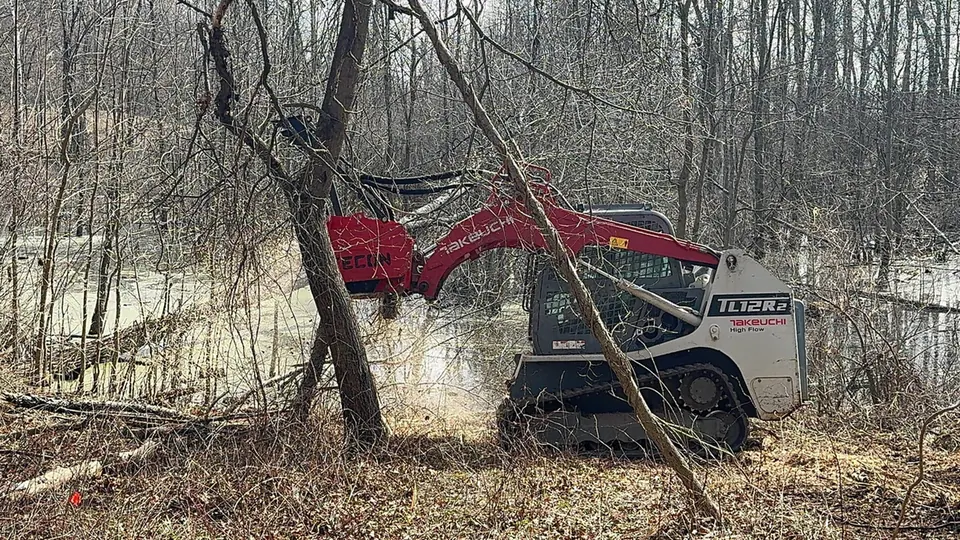
From Royal Oak it is about forty minutes up I-75 and M-24 to Oxford, and the same person makes the call and runs the machine: a high-flow tracked skid steer with a FECON forestry mulcher and a brush hog attachment. Building site, pasture edge or hunting parcel, the job is one flat project price with the drive built in. Phone (810) 776-8524 between 8 AM and 8 PM, any day, or use the quote form.
Where we work in Oxford Township: the Village of Oxford, Thomas, Oakwood, Waterstone and the Seymour Lake, Ray, Coats, Baldwin, Lakeville, Drahner, Indianwood, Dunlap, Oakwood and Lapeer (M-24) road corridors, out to the Addison, Brandon, Orion and Lapeer County lines.
Common Jobs in Oxford Township
- Wooded building sites on the dirt roads north and west of the village, cleared to the house footprint, drive and septic area with the keeper oaks flagged.
- Backyard reclamation on the lake and subdivision lots around Stony Lake, Clear Lake and Waterstone, where buckthorn has taken the back third of the yard.
- Horse pasture and paddock reclamation north of the village, with fence lines opened for new board or wire.
- Hunting parcels toward the Addison and Lapeer County lines: access trails, stand approaches and shooting lanes.
- Brush hogging of open fields and old hay ground that has gone a few seasons without a cut.
What We Do in Oxford
Each service, and why it comes up on this ground.
Wooded building sites
The parcels along the gravel roads north and west of the village still get built on. We open the house footprint, the drive and the septic area to the stakes, keep the oaks you tape, and leave a chip surface the excavator grades through. Lot clearing in Oakland County and the lot clearing guide cover the order of work with the builder.
Lake lots and subdivision backyards
Around Stony Lake, Clear Lake, Oxford Lake and Waterstone the back third of the yard has gone to buckthorn. We grind the understory flat around the trees you keep, work a bank from the top down, and leave a chip layer the mower can run. Lakefront and creek bank clearing covers the banks.
Pasture and horse fence lines
The larger properties north of the village carry paddocks and fence lines that go to autumn olive and rose when the grazing drops. We open the line for new board or wire, grind the brush off the pasture edge, and schedule around turnout. Pasture reclamation and the pasture fence line guide cover species, livestock and seasons.
Hunting parcels toward the county line
The wooded parcels toward Addison Township and the Lapeer County line get access trails, stand approaches, shooting lanes and plot ground, cut from late summer into October so the walk in is quiet. Hunting land clearing has the layout logic and the food plot guide covers getting a corner ready to plant.
Brush hogging the old fields
Open fields and old hay ground that have gone a few seasons without a cut are mowed with the brush hog attachment on the same tracked machine, and the mulcher follows for the thickets along the edges. Brush hogging covers the timing.
Trails along the Polly Ann corridor
Parcels that back onto the trail corridor and the wet ground beside it want a two-track or a loop trail to the back line. We cut it to the width you walk or drive, schedule the wet stretches for frozen ground, and leave the chips as the surface. Trail cutting covers layout.
Invasive brush
Autumn olive, buckthorn and honeysuckle, with sumac and aspen on the sandy ground, are the Oxford mix. Mulching grinds them down and shreds the root crown; a mowing or spot follow-up in the first two summers finishes the job. Invasive growth removal and the autumn olive guide explain what grows back.

How a Job Goes in Oxford
From the first call to the finished chip layer.
1. Stakes, flags and tape
An Oxford job starts with what is marked on the ground: the surveyor's stakes on a building site, flags on a fence line, tape on the oaks that stay, a ribbon on the stands and cameras of a hunting parcel. Photos of those marks are usually enough to quote from; a big parcel gets a walk.
2. One flat price for the parcel
The quote is a single written figure for everything on the list, the forty-minute drive from Royal Oak included, and it does not move once the machine is on site. The phone is answered 8 AM to 8 PM every day; form and text replies come within one business day.
3. Sandy ground, any season
The uplands here carry a tracked machine in any month. Low ground along the trail corridor and the lake shores is scheduled for a hard freeze or the dry end of summer, hunting work for late summer, and pasture work for the day the herd is in the far paddock.
4. The finish on sand
Everything is ground where it stood into a chip layer that holds the sand while grass comes back through it. Roots stay in the ground, stumps are flush, there is no pile to burn, and a building site is ready for the excavator the day we leave.
The Oxford Calendar
What suits each season on Oxford Township ground.
Winter
The wet stretches along the Polly Ann corridor and the low lake shores are reached on frozen ground, and bare branches make lot lines, fence posts and stakes plain from the seat.
Spring
Building sites first, so the builder has the summer; the sandy uplands take the machine early and the low corners are left until they firm.
Summer
Pasture edges once the hay is off, backyards and building sites straight through, and hunting trails and lanes from late July so the ground is quiet by October.
Fall
Hunting work wraps up early in the season; after that the calendar fills with fence lines, lake banks and lots meant for a spring build, all with the leaves down.
Where We Work Around Oxford
The township is about thirty-five square miles, with the village, incorporated in 1876, at the center where M-24 crosses the Polly Ann Trail. Stony Lake, Clear Lake, Tan Lake and Davis Lake sit among the hills, Oxford Lake and Waterstone Lake near the village, Powell and Paint lakes with their township parks, and Horseshoe Lake State Game Area on the public side. Seymour Lake Road and its park run across the township, Baldwin Road runs north to the Lapeer County line, Lakeville Road heads east toward Addison Township, and Oakwood sits on the Brandon Township line to the west.
Oxford is about thirty miles and forty minutes from our shop in Royal Oak, up I-75 and M-24. Lake Orion to the south, Addison Township and Leonard to the east, Ortonville and Brandon Township to the west, and Metamora and Dryden across the Lapeer County line are the same trip, so a job that sits on a township line is still one project price.
Questions We Hear in Oxford
Can you clear the sandy hills in Oxford without tearing them up?
Yes. The machine runs on wide tracks, and the chip layer it leaves is what holds the sand while grass comes back. We plan the route in and out on site so the lawn and the drive are not rutted.
Do you work on small lots inside the village?
Yes. A village backyard that has grown shut is usually a half-day job, and there is no brush pile left at the curb. Send photos of the gate or side yard and we will tell you how we would get in.
Do you clear hunting parcels and trails around Oxford?
Yes. The parcels toward the Addison Township and Lapeer County lines get access trails, stand approaches and shooting lanes cut from late summer into October, mulched so the walk in is quiet. Flag the stands and cameras and we work around them.
How much ground do you cover in a day in Oxford?
Heavy brush and saplings go at roughly an acre a day; old hay ground, where the brush hog does the work, goes much faster. A building site is one or two days, and a wooded parcel is quoted in sections with a date for each.
Can you open a fence line for new board or wire?
Yes. We clear the strip to the width your fence installer asks for, grind the stumps flush so the auger runs clean, keep the machine off the posts and wire you flag, and leave the line walkable. Fence line clearing covers the details.
What is left of the brush afterward?
A chip layer a few inches deep, lying where the brush grew, over roots that stay in the sand and hold it. On a building site the excavator grades through it; on a pasture edge grass comes up through it by the second season. The mulch guide has the details.
Does autumn olive come back after mulching?
A few root sprouts show up the first summer; one mowing or a spot follow-up that year is normally all it takes, and the autumn olive guide shows what the regrowth looks like.
What do you need marked before you come to Oxford?
The stakes on a building site, the fence line flagged, the stands and cameras ribboned on a hunting parcel, and tape on any tree that stays. Leave the gate open and put the horses in the far paddock on the day, and the rest is ours.
Nearby Areas We Also Serve
See everything we do in Oakland County or browse all service areas.
Services in Oakland County
- Land Clearing in Oakland County
- Land Clearing in Southeast Michigan
- Forestry Mulching in Oakland County
- Lot Clearing in Oakland County
- Lot Clearing
- Brush Hogging in Oakland County
- Brush Hogging
- Brush Clearing & Brush Removal
- Fence Line Clearing
- Land Clearing for New Construction
- Pasture Reclamation
- Hunting Land Clearing
- Trail Cutting
- Lakefront & Creek Bank Clearing
- Invasive Growth Removal
Overgrown Ground in Oxford?
Send the address and a few photos through the quote form, or call. You will get one project price for the whole job, travel included.