
Forestry Mulch vs Wood Chips vs Bark Mulch: What Each One Is, What It Is Good For, and What to Do With the Chips on Your Land
The Gibson Environmental Services crew
More than 10 years clearing land, cutting trails, and running forestry equipment in Southeast Michigan.
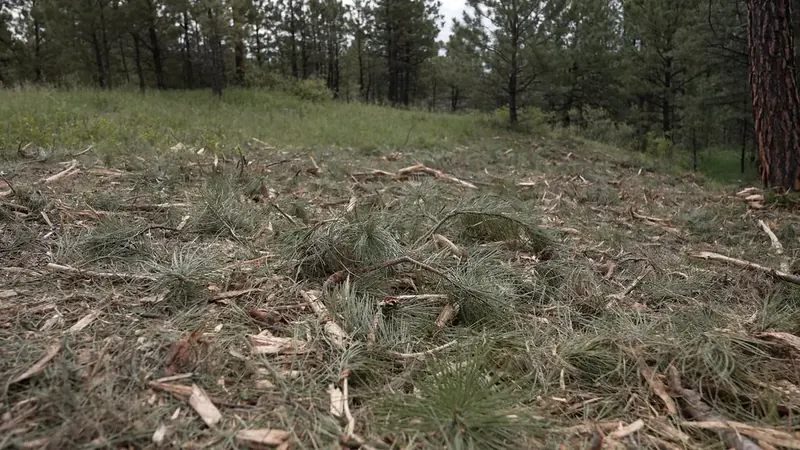
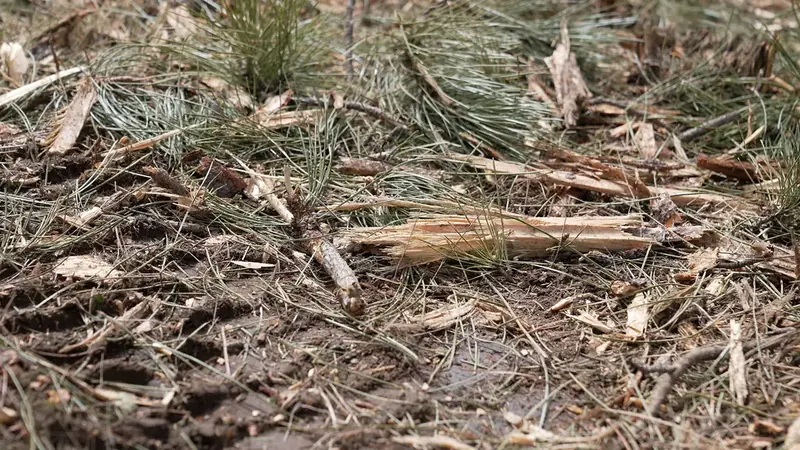
Forestry mulch is what a forestry mulcher leaves on the ground: the whole plant, trunk, limbs, bark, leaves and the stump, ground into coarse, ragged chips of mixed sizes and left where it grew, mixed with some soil and whatever was on the ground. Wood chips, the arborist kind, are limbs and trunks fed through a chipper and blown into a truck: cleaner, more uniform, mostly wood with some bark and leaf. Bark mulch is the bagged product: shredded or nugget bark, uniform, dark, and bought by the yard for beds. They are three different materials that share one word, and they belong in three different places.
This guide lays the three side by side, answers the nitrogen question that follows every pile of chips, gives the decay times, and lists what the chips a clearing leaves behind are good for on a property: trails, drive edges, muddy gates, slopes, new plantings and the chicken run. It follows our guide to what happens to the mulch after forestry mulching, which covers the chip layer on the cleared ground itself, and the guide to brush piles after clearing land.
The Three Materials, Side by Side
| Forestry mulch | Arborist wood chips | Bark mulch | |
|---|---|---|---|
| What it is | The whole plant ground in place: wood, bark, leaves, stump and some soil | Limbs and trunks through a chipper: mostly wood, some bark and leaf | Bark only, shredded or in nuggets, from sawmills |
| Size and look | Coarse and ragged, from fine to fist-sized, in a layer a few inches deep over the whole cleared area | Uniform chips an inch or two, in a pile or a truckload | Uniform, dark, fine to nugget, bagged or by the yard |
| Where it is | On the ground it came from; it never moves | Wherever the truck dumps it | Wherever you spread it |
| Cost | Part of the clearing; there is no extra material and no hauling | Often free from a tree crew with a truck to empty; otherwise by the load | By the bag or the yard, the most expensive per cubic foot |
| Best use | Holding a cleared site: erosion control, weed suppression, soil building; trails and lanes | Paths, trails, around trees and shrubs, mud control, compost | Beds near the house where looks matter |
| Decay | Two to four growing seasons for the layer; faster where it is thin and damp | Two to three years | One to two years for shredded, longer for nuggets |
| Nitrogen | On the surface, none taken from the soil below; worked into a bed, a season of tie-up | Same: fine on the surface, a season of tie-up if mixed in | Same, and the finest shredded bark ties up the most |
The Nitrogen Question
Every pile of chips comes with the warning that wood robs nitrogen from the soil. The research answer, from the university horticulturists who have tested arborist chips as a landscape mulch, is that the warning applies to chips worked into the soil and not to chips laid on top of it: a surface layer of wood chips has no effect on the nitrogen in the soil beneath it, except to raise it slowly over the years as the layer breaks down, and the microbes that tie up nitrogen while they digest fresh wood do it in a thin zone at the surface where no root is feeding. Mixed into a bed, fresh chips do tie up nitrogen for about a season, which is why the extension vegetable gardeners steer people to straw in the beds and chips on the paths. Chips that have aged six months or more on a pile are past the problem either way.
For a cleared site that means: leave the forestry mulch on the surface and plant through it, and it feeds the ground. Rake it into the soil of a bed and it costs you a season. Pull it back a few inches from the stem of anything you plant.
What Forestry Mulch Is Good For
- Holding a cleared site: the layer takes the impact of the rain, keeps the soil from washing on slopes and banks, and shades the seed bank so the weeds come up thin. On a hillside it is the best erosion control a clearing can have; see steep hillside clearing.
- Trails, lanes and shooting lanes: a mulched corridor is walkable and drivable the day it is cut and stays dry underfoot.
- Pasture, plot and lawn conversion: seed goes straight into the chips, the layer holds moisture for the seedlings, and the chips turn into soil under the grass; see grass regrowth after mulching.
- Woodlot thinning: between the keeper trees it is the forest floor, feeding the roots of the trees that stay.
- Garden beds are the exception: aged and laid on the surface, fine; raked into the soil anywhere you want to plant this season, a lost season.
What Arborist Wood Chips Are Good For
The research on landscape mulches ranks arborist chips among the best materials for trees and shrubs: better moisture retention and temperature control than most alternatives, slow decay, and a mix of bark, wood and leaf that feeds the soil life under it. They are the right material for paths, for the ring around a planted tree, for a muddy gate or a dog run, and for a compost pile that needs carbon. A tree crew with a full truck will often dump them for nothing. The chips that come off a storm cleanup where the limbs are chipped rather than mulched are this material.
What Bark Mulch Is Good For
Looks. Bagged bark is uniform, dark and tidy, which is what a bed by the front door wants, and nuggets last longer than shredded bark. It does the same work as chips at several times the cost, and the finest shredded products tie up the most nitrogen if they get worked in. Nobody mulches an acre with it; nobody needs to.
Seven Uses for the Chips a Clearing Leaves Behind
Leave them where they are
The default, and the right answer on most of the ground. The layer is doing the holding, shading and soil-building the clearing needs.
Trails and lanes
A mulched trail stays dry and firm; a pile of chips from a clearing corner, spread on a wet stretch of an existing trail, does the same.
Drive edges and muddy gates
Chips on the soft shoulder of a gravel drive or the mud at a gate firm it up for a season or two.
Slopes and banks
Leave the layer whole on any slope; raked chips on a hill wash. Add chips where a bank is bare.
Around new plantings
A ring of chips around a planted shrub or tree, pulled back a few inches from the stem, is the standard advice from the horticulture research. Natives planted into a cleared edge get this for free; see what to plant after removing buckthorn and honeysuckle.
The chicken run, the dog yard, the compost
Chips keep a run from turning to mud and give a compost pile the carbon it needs.
The garden, with care
Aged chips laid on top of a bed, and straw in the beds where the chips are fresh. Chips on the paths either way.
On our jobs the forestry mulch stays on the ground; it is the product of the method, not a byproduct to haul. Where you want a pile of chips for a trail or a gate, say so on the walk-through and the pass is planned to leave one.
Common Questions
Is forestry mulch good for gardens?
On the surface of a bed, once it has aged, yes; raked into the soil, it ties up nitrogen for a season. The vegetable-garden advice from the extension offices is straw in the beds and chips on the paths. On a cleared site, forestry mulch left where it lies is doing the holding and soil-building the ground needs.
Wood chips or mulch for weed control?
Both work by shading the seed bank, and a coarse layer of wood chips or forestry mulch a few inches deep does it longer than fine bark, because it breaks down more slowly and lets water through. Fine shredded bark mats and sheds water.
Do wood chips rob nitrogen from the soil?
Only when they are mixed into it. A surface layer of chips has no effect on the nitrogen in the soil below, and raises it over time as it breaks down; the tie-up happens in a thin zone at the surface where no root feeds. Chips aged six months are past the question either way.
How long do wood chips take to decompose?
A forestry mulch layer is soil in two to four growing seasons, faster where it is thin and damp. Arborist chips go in two to three years. Shredded bark in one to two, nuggets longer. Fine material in contact with the ground goes first; the fist-sized pieces last.
Can I use the chips on a driveway or a trail?
Yes. Chips on a soft drive shoulder, a muddy gate or a wet stretch of trail firm it up for a season or two, and a mulched trail is dry underfoot from the day it is cut.
Do you haul the chips away?
No. The forestry mulch is the product of the method and stays on the ground it came from, which is the point: no piles, no hauling, no bare soil. Where you want a pile for a trail or a gate, we plan the pass to leave one.
Are wood chips good around trees?
They are among the best mulches for trees and shrubs in the research: moisture, temperature, slow decay and soil life. A ring a few inches deep, pulled back from the trunk so the bark stays dry.
Sources and Further Reading
The ranking of arborist chips, the nitrogen findings and the vegetable-bed caution come from these university pages; the decay times are the ranges in the stump and slash guides. What we do with the chips on our own jobs is stated in the text.
Washington State University Extension: Using Arborist Wood Chips as a Landscape Mulch (FS160E)
University of California Agriculture and Natural Resources: Myths of Mulch
University of Maine Cooperative Extension: Using arborist chips in a vegetable garden
Oregon State University Extension: Other options for treating slash: mastication
Iowa State University Extension and Outreach: How to Remove Tree Stumps (decay and chip handling)
Where We Do This Work
The work in this guide is done across eight Southeast Michigan counties from our base in Royal Oak. Every county page lists the townships we work in most, with a page for each.
Want to Know What the Ground Will Look Like After?
We walk the site, hear what the ground is for and plan the pass so the chips do their job where you want them. The quote is free.