
Clearing the Line for a New Fence in Michigan: The Order of Work With Your Fence Installer
The Gibson Environmental Services crew
More than 10 years clearing land, cutting trails, and running forestry equipment in Southeast Michigan.
A new fence goes in straight, fast and on budget when the line is open before the fence crew arrives. Posts get set in soil instead of stumps, wire gets stretched without brush in the way, and the installer is on the ground for the days they quoted rather than hacking a path. Clearing the line is a separate trade from building the fence, and the two jobs have an order.
This guide is for a property owner in Southeast Michigan who is having a fence installed or replaced on a line that has grown in: a back line in a wooded subdivision, a pasture perimeter, a hedgerow between a field and a new house site. It covers the sequence with the installer, the width the crew needs in feet, how to mark the line, what to leave standing, old wire and stones, a short section on opening a line for a survey crew, and the timing. The overgrown fence line guide is the hub for the whole topic; fence line clearing is the service page.
The Order of Work
| Step | Who | What happens |
|---|---|---|
| 1 | You | Choose the fence type and the run. Find the property pins or have the line surveyed, and decide which trees along it stay. |
| 2 | Fence installer | Walks the line, quotes the fence, and names the strip width the crew needs and anything they want left or removed. |
| 3 | You | Mark the line and the keeper trees with flags or paint, and photograph the markings. |
| 4 | Clearing crew | Grinds the brush, vines and saplings on the strip where they stand, flush with the ground; works around the flagged trees, posts and wire. |
| 5 | Fence installer | Sets posts on the cleared, walkable line, then stretches wire or hangs boards and panels. |
| 6 | You | First mowing along both sides in the first summer, then a yearly pass; the line stays a fence instead of becoming a fence row again. |
The reason the clearing comes before the posts is mechanical. A post driver or an auger needs to be set over soil, not over a stump or a root crown, and a stretched run of wire needs an unobstructed line from brace to brace. Clearing after the posts are in is slower and riskier for the new fence; clearing a week or two before the crew is the normal rhythm. Our new home site clearing page describes the same sequencing with a builder.
The Width the Crew Needs, in Feet
Fence installers set the width, and it varies with the fence and the equipment they bring. What the arithmetic supports is a minimum. The compact track loader class that clears these lines is 78 inches wide, 6.5 feet, and the forestry mulcher heads built for it are 65 to 87 inches across overall with a cutting swath of 50 to 72 inches. Any machine that will travel the line, the clearing carrier or the installer's post driver, needs a strip wider than itself plus room to work on both sides, which is why a strip of about 10 feet is the smallest sensible clearing for a new fence and most installers ask for more on a long rural run.
| Fence type | What the crew does on the line | What that means for the clearing |
|---|---|---|
| Woven wire or high-tensile | Drives or augers line posts, builds braced corners and ends, stretches wire the full run | A straight, open strip for the stretcher; corners and ends opened wider than the run so the brace assembly has room. |
| Board or split rail (horse and estate fences) | Sets posts on a tight spacing, nails or hangs rails from both sides | Working room on both sides of the line, so the crew can stand and nail; a mowable edge afterward keeps boards clear of brush. |
| Electric | Sets posts and insulators, runs wire that must stay clear of vegetation | A clean strip and a plan to keep it mowed; the fence maker says to mow and clear brush and trees along the route first. |
| Chain link, vinyl or aluminum (yard) | Sets posts in concrete on short spacing, hangs panels | A narrower strip in most yards, but every post location clear of roots and stumps; the side yard and gate access matter more than the width. |
If the installer gives you a width, that is the number. If they have not, ask for it before the clearing is quoted, because the width sets the acreage: a 600-foot back line cleared 10 feet wide is 6,000 square feet (0.14 acre), and the same line at 16 feet is 9,600 square feet (0.22 acre). The length-to-acres table in the hub guide covers six lengths and six widths.
Marking the Line
The line itself
Stakes or flags at the pins and at every change of direction, with a string line or a run of paint on the ground between them where the brush allows. Use one color for the fence line and keep it for nothing else.
Trees that stay
A second color of flagging on every tree you want kept, tied at eye height on the side facing the line. A tree that is flagged is worked around; a tree that is not flagged and stands inside the strip is cleared.
Old wire, posts, stones and pipes
A third color on anything in the ground the machine should know about: old wire, buried posts, a stone pile, a well head, a buried line marked by the utility locator. Flag the ends of an old fence and, if you know it, where the wire runs.
Photograph it
Walk the marked line and photograph it from each end and the middle. Send those photos with the clearing request; they settle the width, the access and what is on the line before anyone drives out.
What to Leave Standing
A fence line through brush usually has a few trees worth keeping: a mature oak or maple that shades a paddock, a straight cherry, a row of old maples that was the original fence row. Keep them off the line itself where you can. A tree standing on the fence line drops limbs on the wire, heaves posts as the roots grow and makes the line crooked around it; a tree set back a few yards gives the shade without the damage. Where a keeper tree is on the line, the installer runs the fence past it and the clearing crew opens the strip around it without grinding the roots.
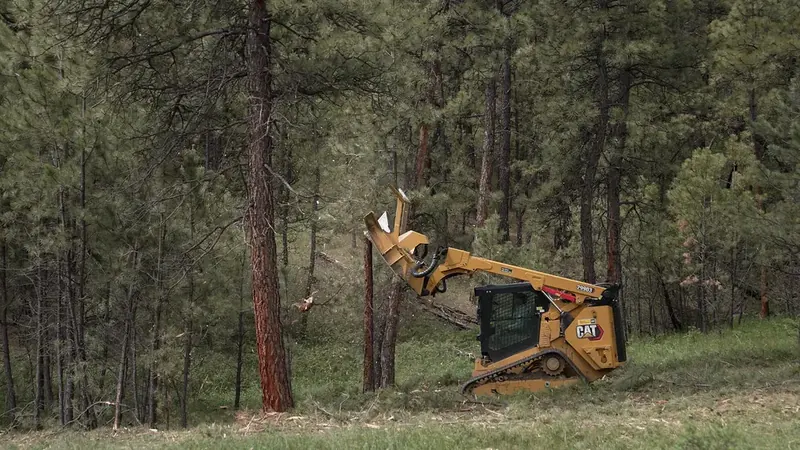
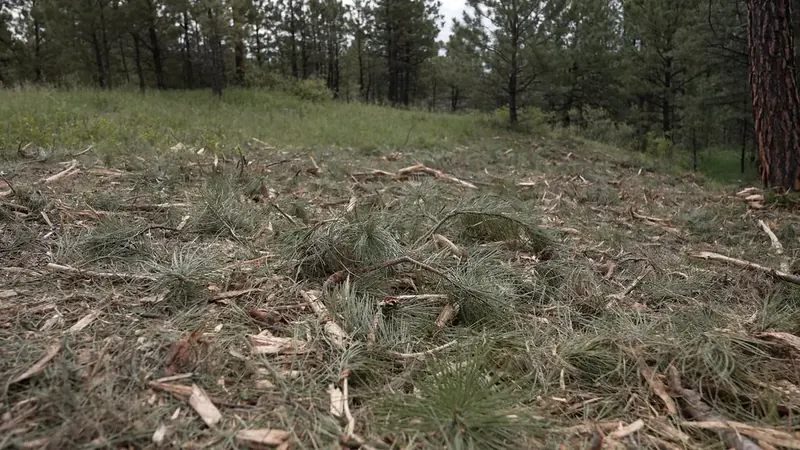
Everything else on the strip comes out: box elder, autumn olive, honeysuckle, buckthorn, multiflora rose, the grapevine on the old wire, and the cherry and elm saplings that would be trees in ten years. The forestry mulcher grinds the stems and root crowns flush with the ground and leaves them as a chip strip, so the auger or post driver meets soil and the mower can run the line the same week. The dendrology guide explains how we tell a keeper tree from brush on the walk-through.
Opening a Line for a Survey Crew
If the pins are lost or the line has never been marked, the surveyor comes first, and the surveyor needs two practical things from the ground: a sight line from one point to the next, and a walkable path for the instruments. Through a grown-in fence row that is a single forestry mulcher pass, about 4 to 6 feet wide, along the rough line, with the crew's stakes and flags left untouched once they are set. Ask the surveyor whether they want the brush opened before they arrive or prefer to set points through it and have the clearing follow their flags; crews differ, and either order works. Keep the clearing to the sight line itself and leave the wider corridor for after the pins are in and the fence line is final.
Old Wire, Posts and Stones
Most lines being refenced have an old fence inside the brush. Flag what you know about it and tell the clearing crew where the picture is uncertain. The brush and saplings along the old wire are ground on the open side, the vines are pulled off the wire as the growth around them comes down, and the machine stays off the wire and the posts you flag. Whether the old fence comes out before the new one goes in is a decision for you and the installer; if it is coming out, it is usually easiest once the line is open and every post can be seen. Stones and a stone pile along an old farm line are flagged the same way, and the clearing works around them.
Timing a New Fence in Michigan
Clear in leaf-off, set posts when the ground is workable
Late fall through early spring is the easiest season to clear a line: the pins, flags and old posts are visible with the leaves down, and frozen ground carries the tracked machine across the wet stretches. Installers set posts once the ground is workable, so a line cleared in late winter is ready for a spring fence.
Avoid the nesting season on a brushy line
Wildlife agencies recommend scheduling vegetation clearing outside the local bird nesting season. On a fence row full of shrubs that means booking the clearing for fall or winter rather than late spring.
Farm and pasture lines
A hedgerow beside a field is cleared after hay or after harvest; a pasture perimeter is scheduled around turnout with the animals in the far paddock. The pasture fence line guide covers livestock and seasons in detail.
Lead time
Give the clearing a week or two ahead of the fence crew. Installers book out, and a line that is open and walkable on the day they arrive is the whole point of the sequence.
A Worked Example: 600 Feet of Back Line
A wooded lot with a 600-foot back line, grown into box elder, honeysuckle and grape, is getting a four-board horse fence. The installer asks for a 12-foot strip. The arithmetic: 600 feet times 12 feet is 7,200 square feet, or 0.17 acre of brush to grind, with two flagged oaks on the line to work around and a stretch of old wire along the last 150 feet. The clearing crew opens the strip, grinds the stumps flush, leaves the oaks and the wire where they are, and the fence crew sets posts the following week on a line they can walk end to end. The first summer gets two mowing passes along the new boards; after that, one a year.
What the clearing quote needs from you: the length of the line, the width the installer named, three photos along it, a photo of the gate or side yard the machine would use, and the flag colors. What the installer needs from the clearing: a strip flush with the ground, keeper trees standing, the old fence undisturbed unless you asked for it to come out. Gibson Environmental Services quotes the clearing as one flat project price with travel included; the price factors guide explains what moves it.
Common Questions
Should the fence line be cleared before or after the posts go in?
Before. A post driver or auger needs soil rather than stumps, a stretched run of wire needs an unobstructed line, and the installer is faster on an open strip. Clear a week or two ahead of the fence crew.
How wide a strip does a fence installer need?
The installer sets it, and it depends on the fence and their equipment. The machines involved are about 6.5 feet wide, so a strip of about 10 feet is the smallest sensible clearing for a new fence, with corners and ends opened wider for braced assemblies.
What do I mark before the clearing crew comes?
The line itself in one color, every tree you want kept in a second color, and anything in the ground, old wire, posts, stones, a utility mark, in a third. Then photograph the marked line from each end and the middle.
Can trees stay on the fence line?
They can, but a tree on the line drops limbs on the fence and heaves posts as it grows. Keep mature trees a few yards back where you can; where one must stay on the line, the fence runs past it and the clearing works around it.
What happens to the old fence inside the brush?
It is flagged and left where it is while the brush around it is ground, and the vines are pulled off the wire. Whether it comes out before the new fence goes in is your call with the installer; it is easiest once the line is open.
Do I need a survey before clearing for a fence?
If the pins are lost or the line has never been marked, having the surveyor set points first saves everyone guesswork. The surveyor needs only a sight line and a path, about one mulcher pass wide, and the wider strip is cleared after the pins are in.
What is the ground like when the fence crew arrives?
A strip of wood chips a few inches deep over the roots, flush with the ground and walkable end to end. Posts are set through it into soil, and the strip is mowable the same week.
How far ahead should I book the clearing?
Once the installer has named the width, send the length, width and photos. Fall and winter dates book first for wooded lines; a week or two between the clearing and the fence crew is the usual gap.
Sources and Further Reading
Machine widths are the manufacturers' published specifications; the fence-maker guidance on clearing the route and the wildlife-timing recommendation are from the sources below; the acre arithmetic uses the standard conversions.
Zareba Systems: Make a plan: prepare for electric fence construction (clear brush and trees along the route; establish an equipment path)
Bobcat Company: T86 compact track loader specifications: 78 inch overall width
Kirby-Smith Machinery: FECON Bull Hog skid steer mulcher specifications: 65 to 87 inch overall widths, 50 to 72 inch working widths
National Institute of Standards and Technology: Unit conversion factors: 1 acre = 43,560 square feet
U.S. Fish and Wildlife Service: Timing recommendations for land disturbance and vegetation clearing: protecting nesting birds
Where We Do This Work
The work in this guide is done across eight Southeast Michigan counties from our base in Royal Oak. Every county page lists the townships we work in most, with a page for each.
Fence Going In? Get the Line Open First
Send the length of the line, the width your installer named and a few photos. Gibson Environmental Services clears the strip to that width for one flat project price, travel included, a week or two ahead of your fence crew.