
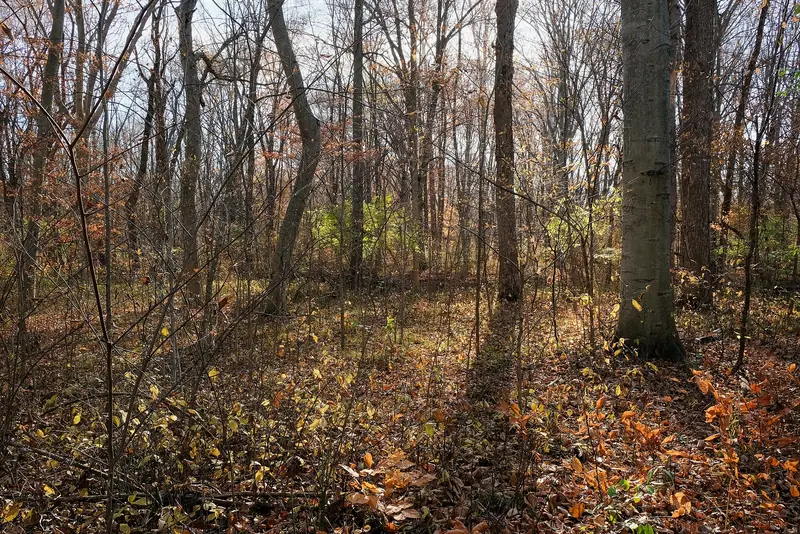
Hunting land in Lapeer, St. Clair, northern Oakland and western Livingston counties all runs the same way: the two-track that was open three seasons ago is shut with cherry and box elder, the walk to the stand is a fight through briars, and the shooting lane you cut with a chainsaw has closed again at deer height. The weeks before the season are when it all finally gets dealt with, and a forestry mulcher does in a day what a chainsaw crew does in a week, without leaving a single brush pile in the woods.
We reopen access trails wide enough for a side-by-side, cut quiet stand approaches from the downwind side, clear long low shooting lanes that leave the screening cover, and open plot ground to a chip layer that can be disked in. Stands, blinds, cameras and mast trees are flagged and left. The chips underfoot are quiet, they shed water on the grades, and ground stumps do not come back the way cut stumps do. Our hunting trail guide and food plot guide go through the layout in detail.
Timing matters more on hunting land than anywhere else. August through early October is when trails, lanes and plots go in so the woods are quiet again by opening day; the leaf-off months are best for sightline work; and wet crossings and creek bottoms wait for frozen ground. Trails, lanes and a plot on one parcel are priced as one project, and bundling them into one visit is the cheapest way to do all three.
What we clear
- Access two-tracks from the road or the barn to the back of the parcel.
- Stand approaches: narrow, quiet walking routes laid out from the downwind side.
- Shooting lanes cut low and long, with the screening cover left.
- Food plot ground cleared to a chip layer ready to disk.
- Brush-outs around ladder stands and box blinds so you can get in, turn and see.
- Property line trails for signs, cameras and fence checks.
What you get
- Trails that are quiet underfoot and drain on the grades.
- Stands, blinds, cameras and mast trees exactly where they were.
- No brush piles along the trail and nothing to burn.
- Plot ground that can be worked the same fall.
How the Job Goes
Send a map or photos
A trail map, a phone video, or a walk with us is enough to price the parcel.
Flag what stays
Stands, blinds, cameras, the oaks and crab apples the deer are hitting.
Cut it in late summer
Trails, approaches, lanes and plots in one visit, so the woods have weeks to settle.
Hunt it
By opening day the chips are quiet, the lanes are open and the deer have gone back to the same runs.
When to do it
August through early October for trails, lanes and plots. November through March for sightline work and wet crossings on frozen ground. Book in July if you want the parcel ready before bow season.
How it is priced
By the project: trail length and width, number of lanes and approaches, plot acreage and density. A 20- to 80-acre parcel is usually a one-day visit. See the pricing guide.
The Ground This Work Happens On


Where We Do This Work
Counties and townships where this job comes up most. Every page covers the local ground and the common jobs.
Questions About This Work
Will the machine push deer off my property?
Any work in the woods moves deer for a few days, which is why trails and lanes go in weeks before you plan to hunt, not the week of. Deer return to the same bedding and travel routes quickly.
Can you clear around existing stands, blinds and cameras?
Yes. Flag them, and any trees you want kept, and we work around them. Approaches are cut from the downwind side so you are not walking through bedding to reach the stand.
How wide should a hunting trail be?
A walking trail can be four to five feet. A side-by-side trail should be six to eight feet with the overhead trimmed. Shooting lanes are the opposite: long and narrow, cleared low, with as much screening cover left as possible.
Do you clear trails in winter?
Yes. Frozen ground is the best time to cross wet spots and swamp edges, and with the leaves down you can see exactly where the deer are moving.
Related services
Other jobs we do
Related Guides

Hunting Trail Clearing in Michigan: Access Trails, Shooting Lanes, and Stand Approaches Before Deer Season
Hunting trail and shooting lane clearing in Southeast Michigan. Quiet trails mulched in place, no burn pile, done before the October 1...
Read the guide →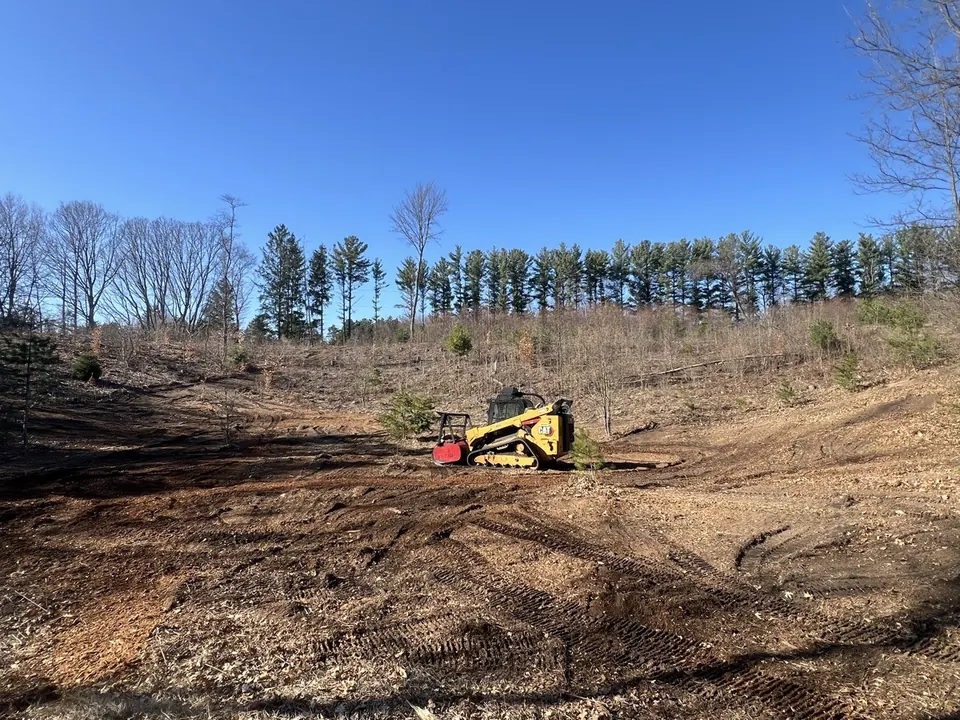
Food Plot Clearing in Michigan: How to Turn Overgrown Ground Into a Plantable Deer Plot
Clearing land for a deer food plot in Southeast Michigan: mulching vs.
Read the guide →
Fall and Winter Land Clearing in Michigan: Why the Cold Months Are the Best Time to Mulch
Why Southeast Michigan land clearing often goes best from October to March: frozen ground on wet lots, leaf-off visibility, and what to...
Read the guide →Ready to Get This Done?
Send the address and a few photos through the quote form, or call. You will get one project price for the whole job.